communication in the care sector
Who: Heritage to Health operates a not for profit organisation.
What: An app to facilitate project management and promote the growth of the initiative.
Length: 9 Month Project
Why: The current manual organisation process leads to attendee dissatisfaction and frustration, while organisers struggle with managing the workload. The process is ad-hoc and lacks repeatable processes.
How: Through focus groups and a contextual inquiry. Create a streamlined platform to bring organisers and participants together to inform, communicate and bring joy.

PROJECT Summary
Heritage to Health operates a drama group in South London, bringing together nurses and children with learning disabilities to learn effective communication skills. The initiative aims to enhance communication between these two groups, with the ultimate goal of reducing preventable deaths in hospital settings.
The program is currently integrated into the nursing syllabus at Kingston University, and the organization aims to establish repeatable processes that can be scaled across other universities. Their vision is for the initiative to be embedded into the nursing syllabus across the UK.
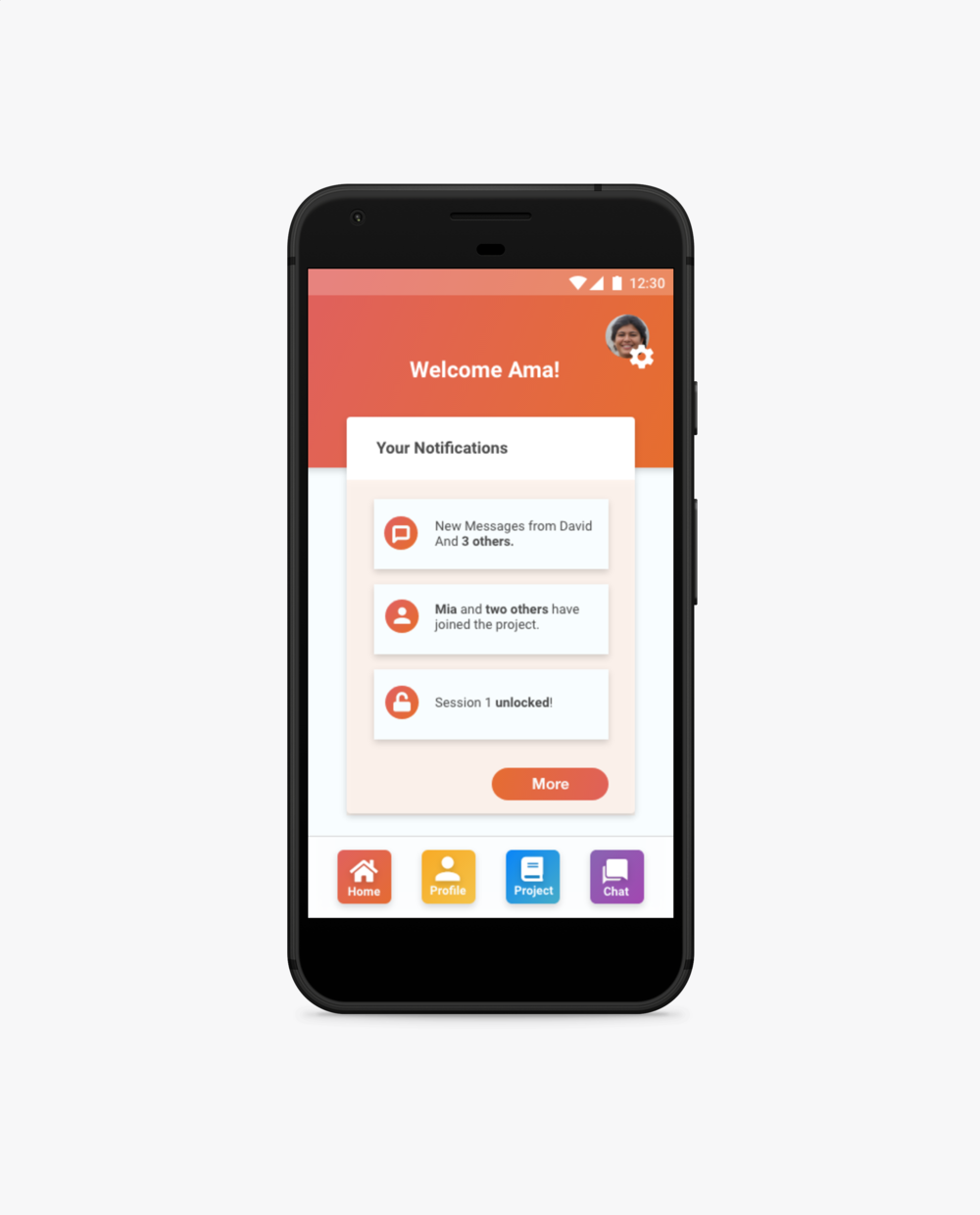
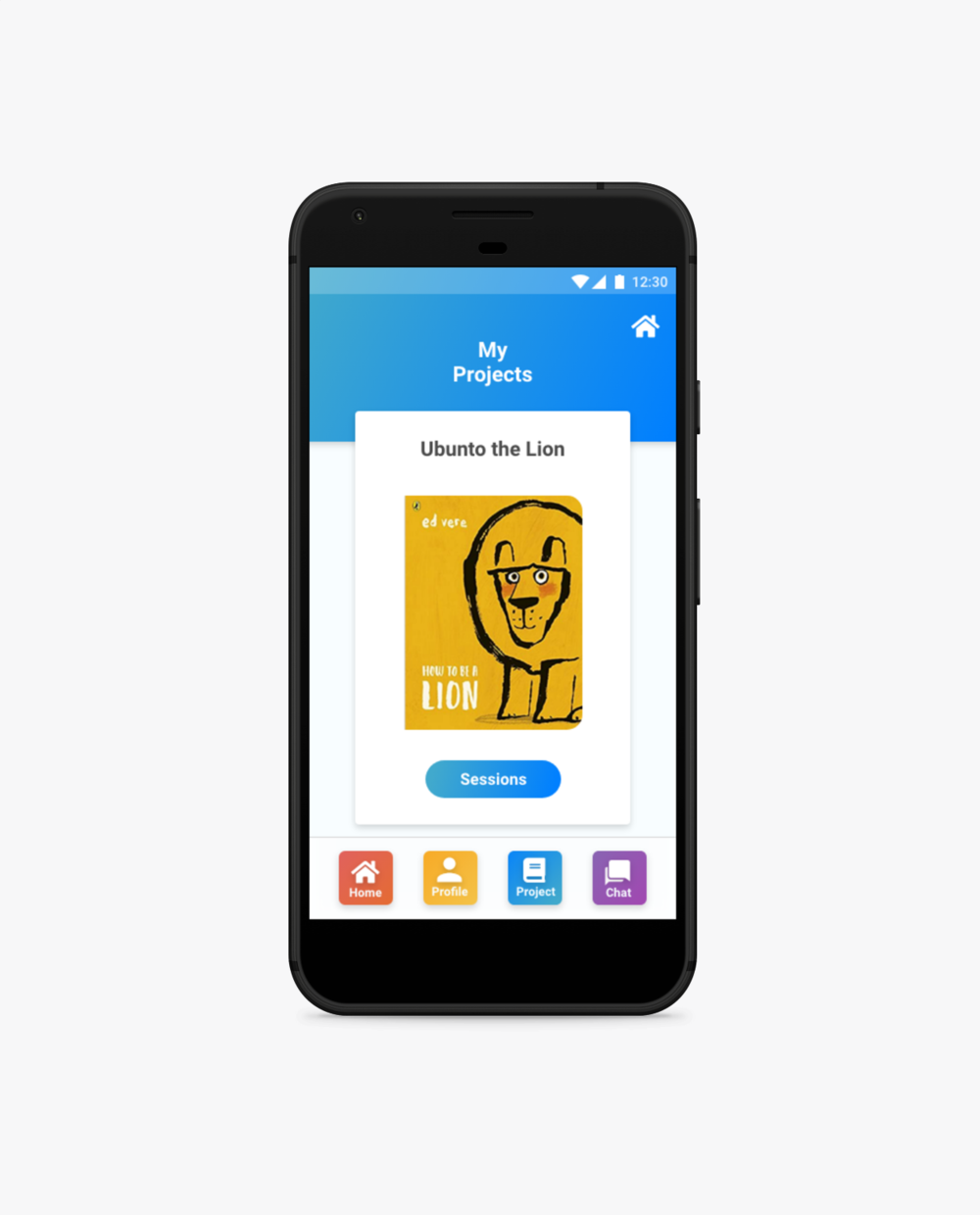
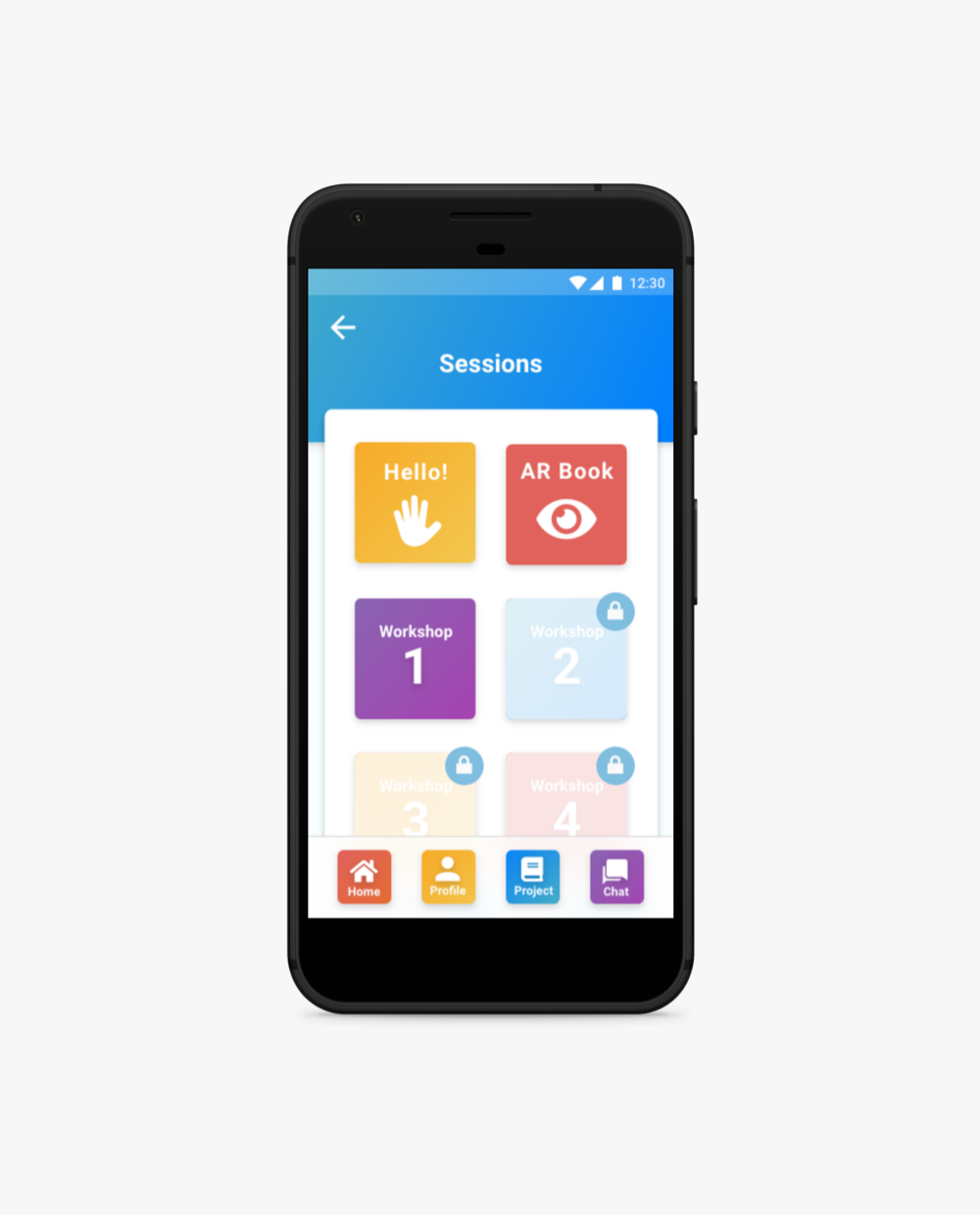
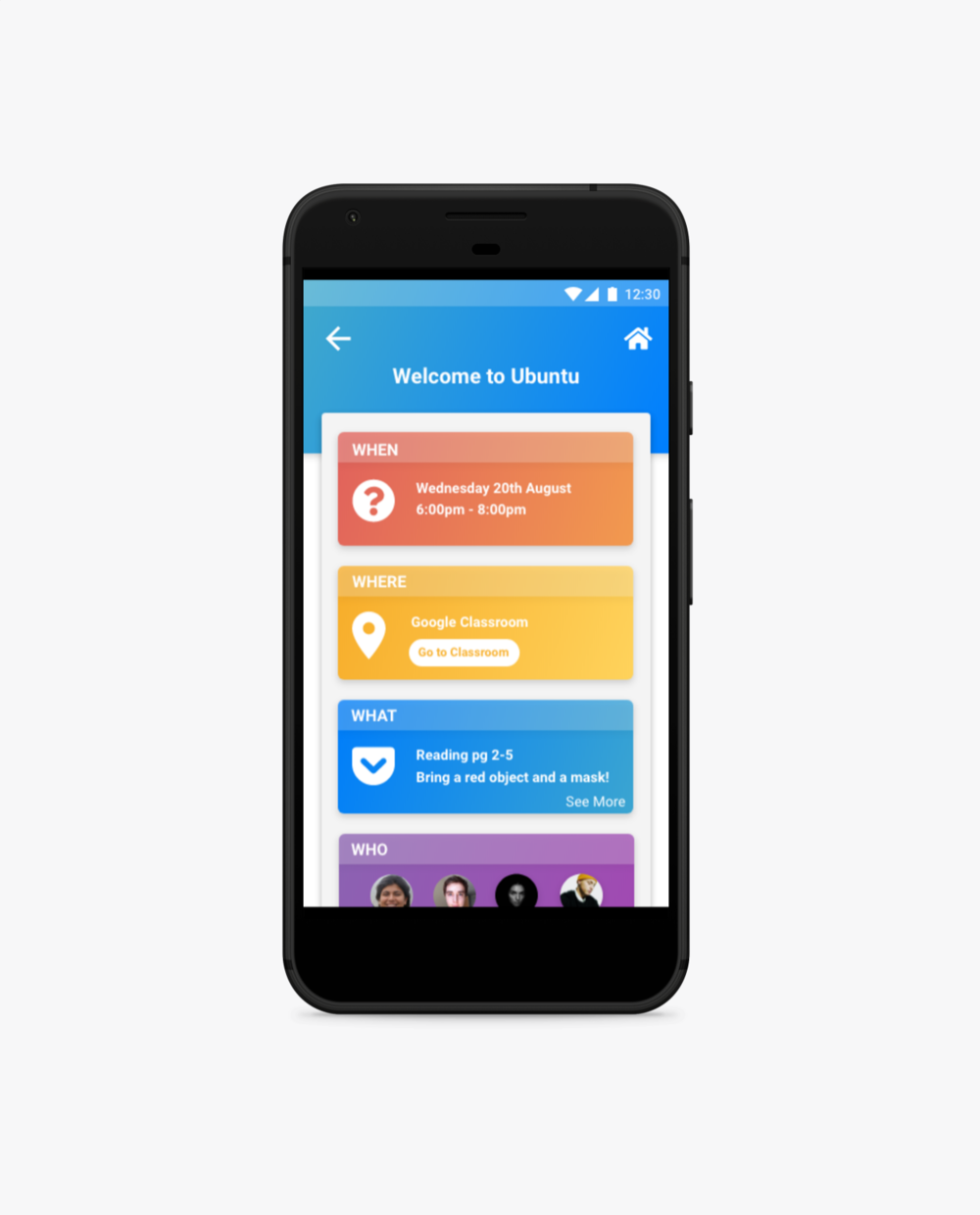
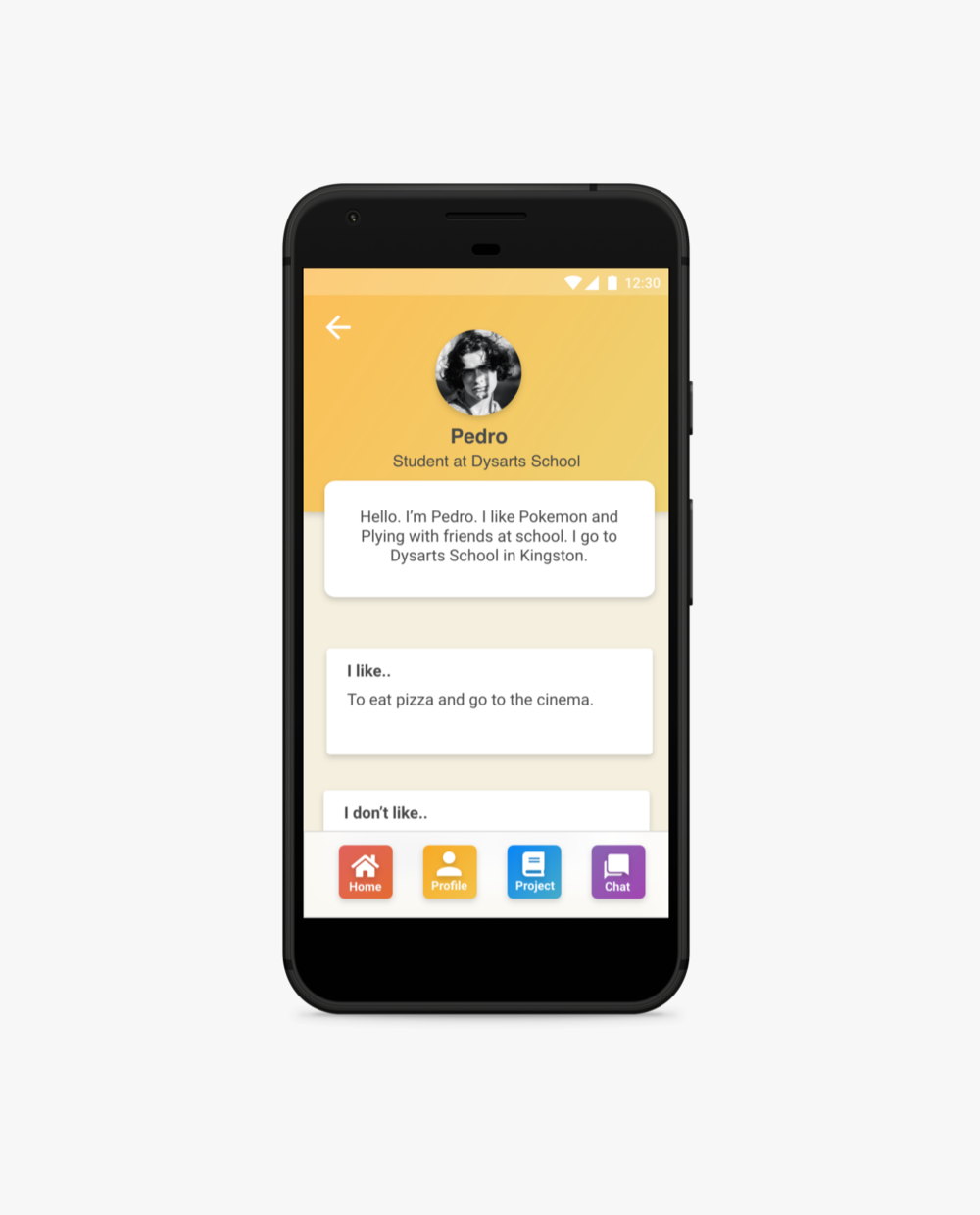
To support participants' communication, I created an app that facilitates interaction, a calendar that provides information on activity locations, and a story section that helps children learn the story before attending the drama group.
Discovery Period
field study & daily debrief with parents
An 8 week field study to understand the process of the project helped me gather insights into the complex needs of all the stakeholders.
To develop an effective research plan, I recognised that user interviews alone may not be suitable for the project. A significant portion of the children involved were non-verbal, making it challenging to understand their needs through interviews alone. Instead, I decided to immerse myself in their experiences by participating in an 8-week field study of the drama group. This allowed me to observe their behaviour and understand their needs from a firsthand perspective.
Overall, by adopting a mixed-methods approach that included observation, interviews, and focus groups with nurses, I was able to gather comprehensive insights into the needs of all stakeholders involved in the drama group. This information was crucial in developing a well-rounded app that catered to the diverse needs of the participants.
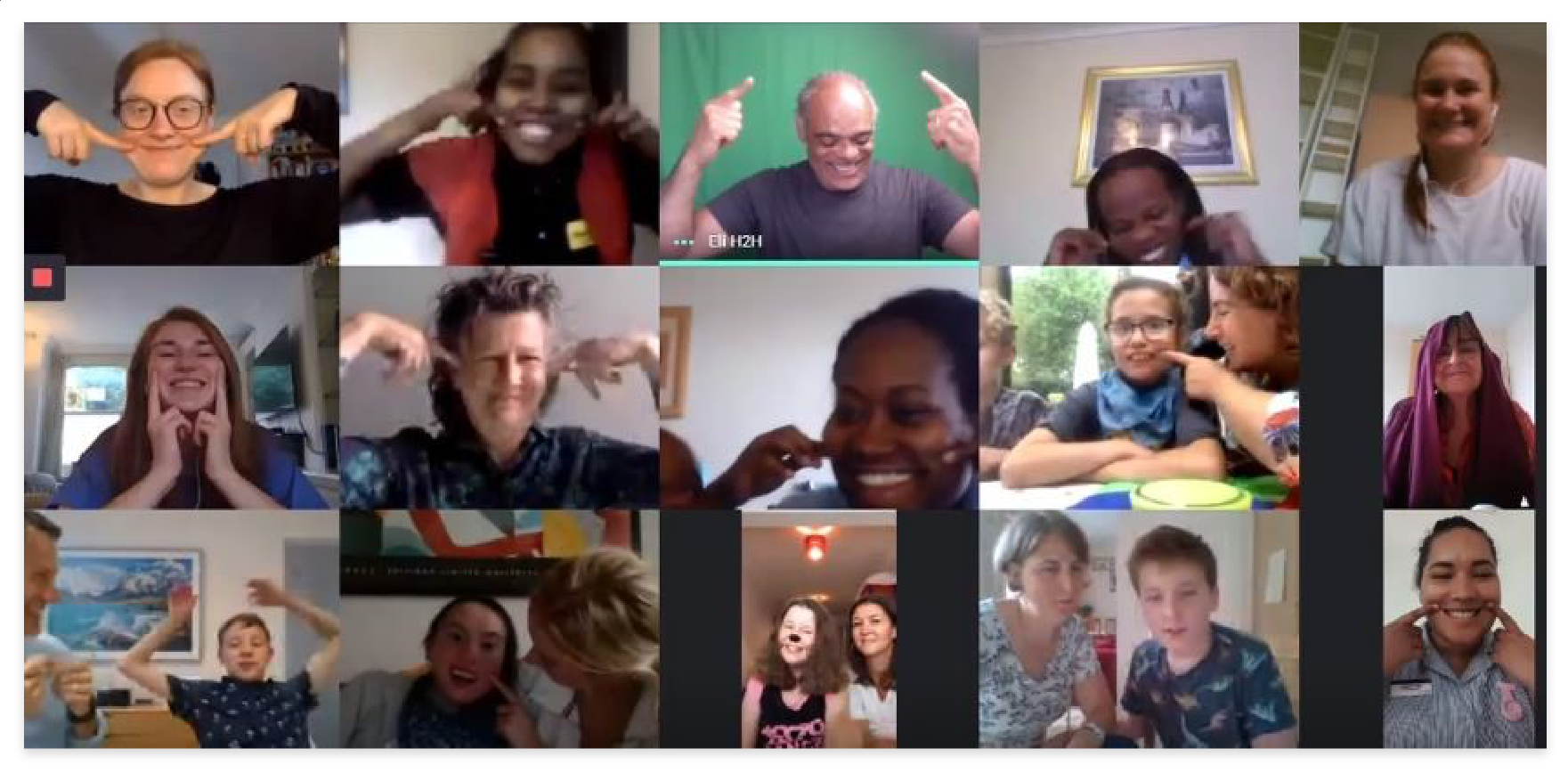
Focus group with nurses
Nurses felt fearful of saying or doing the wrong thing when interacting with children with learning disability hindering their involvement in projects
The nurses expressed apprehension about working with individuals with learning disabilities, as they were concerned about inadvertently making mistakes. They felt unsure about what communication skills were necessary, such as sign language, and were intimidated by the project, which caused them to feel anxious. Moreover, the nurses felt that the project lacked organisation with details being communicated at the last minute.
Interviews with organisers
Organisers feel stressed and find it hard to find time in their busy schedule to organise the project but did so out of care for the cause itself.
Organisers were full time lecturers are Kingston University, they had managed to incorporate the initiative into the syllabus but at the cost of their time and goodwill. They found it extremely difficult to organise the nurses and their learning outcomes, set up KPI’s for the initiative and also organise the project itself with the children. They also had an ambition to scale this initiative to promote their cause and educate nurses going into hospital settings.
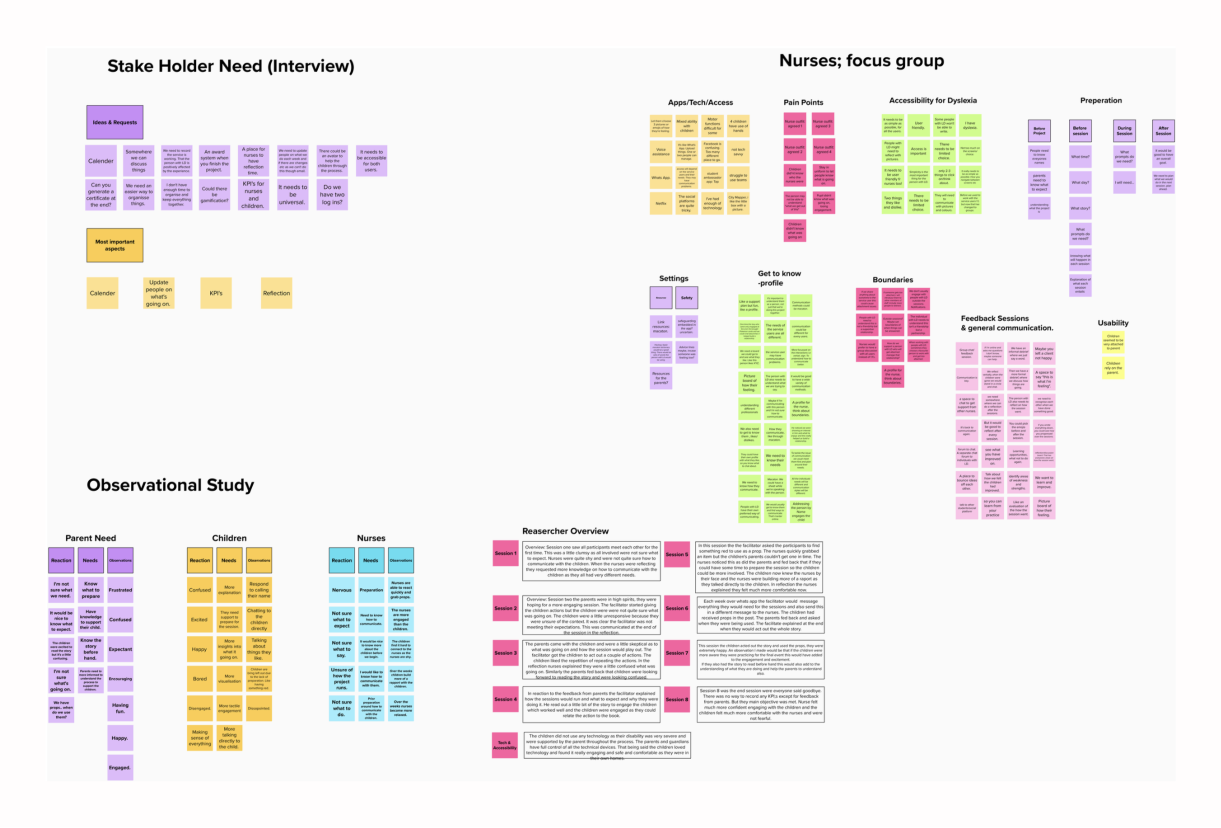
Samples of analysis
Define
ALIGNING USER NEED
All three stakeholders needed to make communication and information exchange easier.
Organisers were full time lecturers are Kingston University, they had managed to incorporate the initiative into the syllabus but at the cost of their time and goodwill. They found it extremely difficult to organise the nurses and their learning outcomes, set up KPI’s for the initiative and also organise the project itself with the children. They also had an ambition to scale this initiative to promote their cause and educate nurses going into hospital settings.
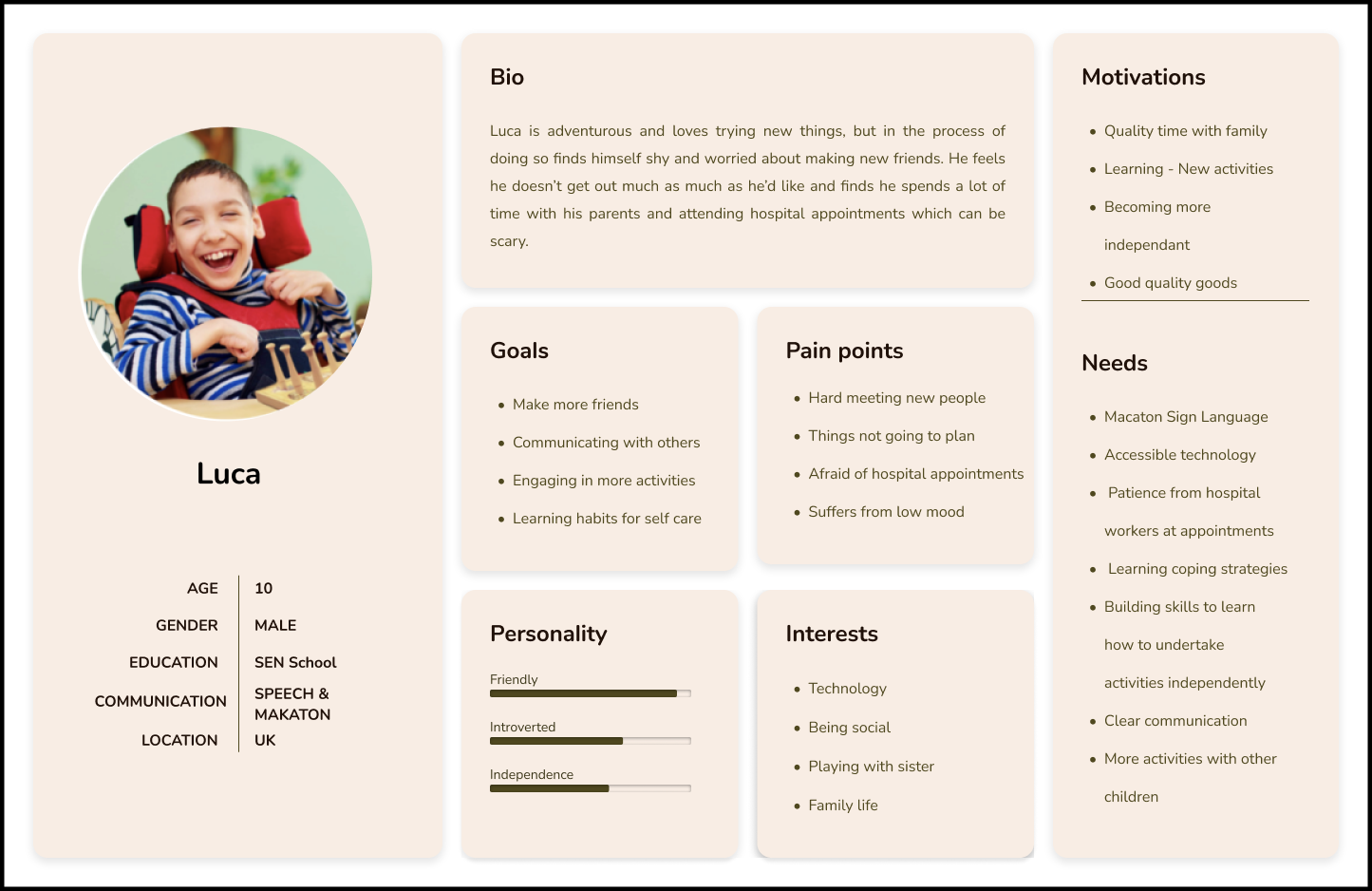
UNDERSTANDING ONE ANOTHER
Nurses needed to understand how to prepare and what communication methods are needed, equally children needed visibility on participants
Organisers were full time lecturers are Kingston University, they had managed to incorporate the initiative into the syllabus but at the cost of their time and goodwill. They found it extremely difficult to organise the nurses and their learning outcomes, set up KPI’s for the initiative and also organise the project itself with the children. They also had an ambition to scale this initiative to promote their cause and educate nurses going into hospital settings.
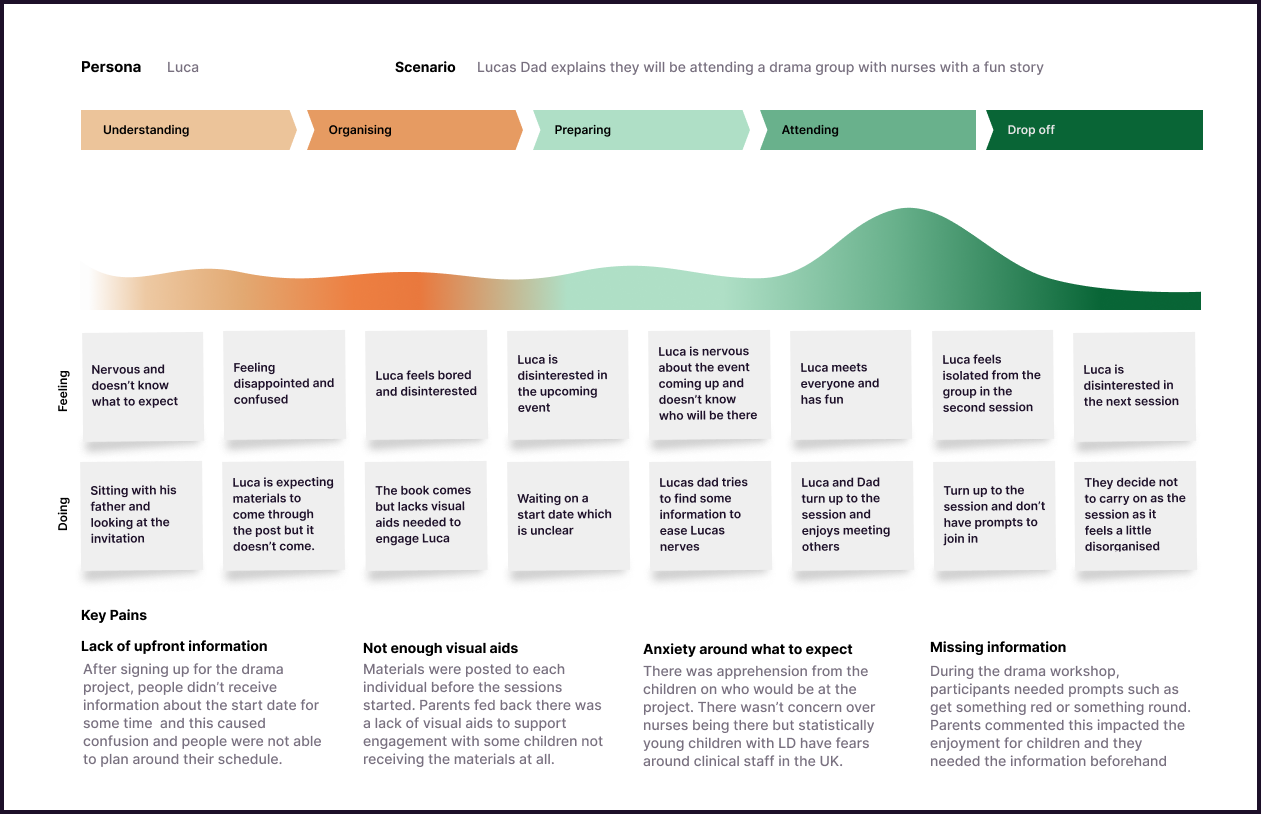
Ideate
Problem Statement
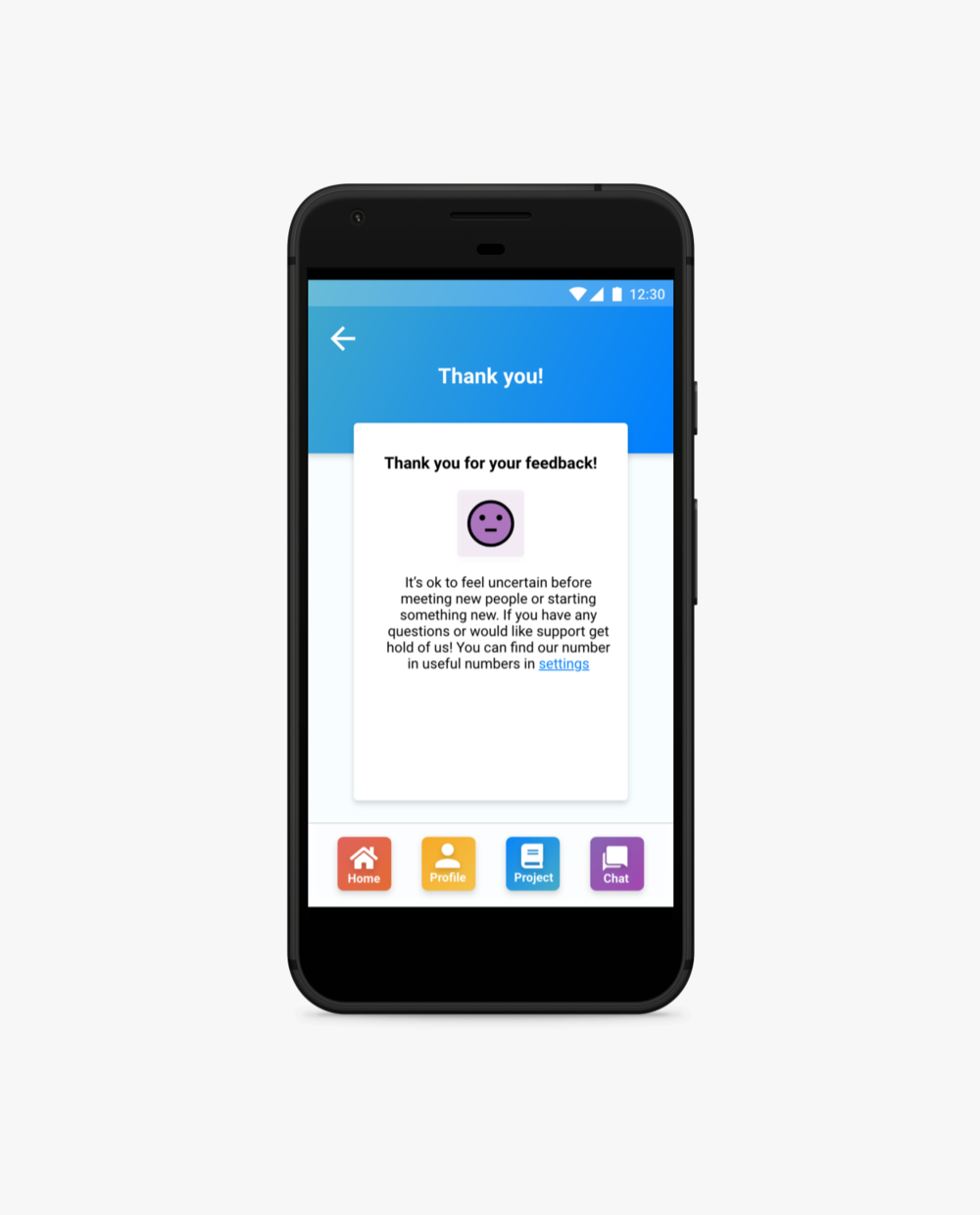
Participants didn’t know what to expect or have enough information to prepare before and during the project, resulting in decreased engagement. Additionally both nurses and children felt anxious before projects due to incorrect pre-conceptions.
Design sprint
Aligning users through co-design and ideating on a feature set from the outcomes of research - HMW, Crazy 8’s, Rapid Prototyping.
To ensure that all stakeholders' requirements were met, we conducted a design sprint that involved everyone. The client had a strong emotional investment in the project, and it was difficult to manage scope creep. However, defining the research and needs clearly helped us stay on track and focus on what is necessary for the MVP's success. We also entertained some creative, ambitious ideas for future iterations, such as using augmented reality to create a more engaging, tactile book. Research has shown that this approach can support individuals with learning disabilities in their educational pursuits.
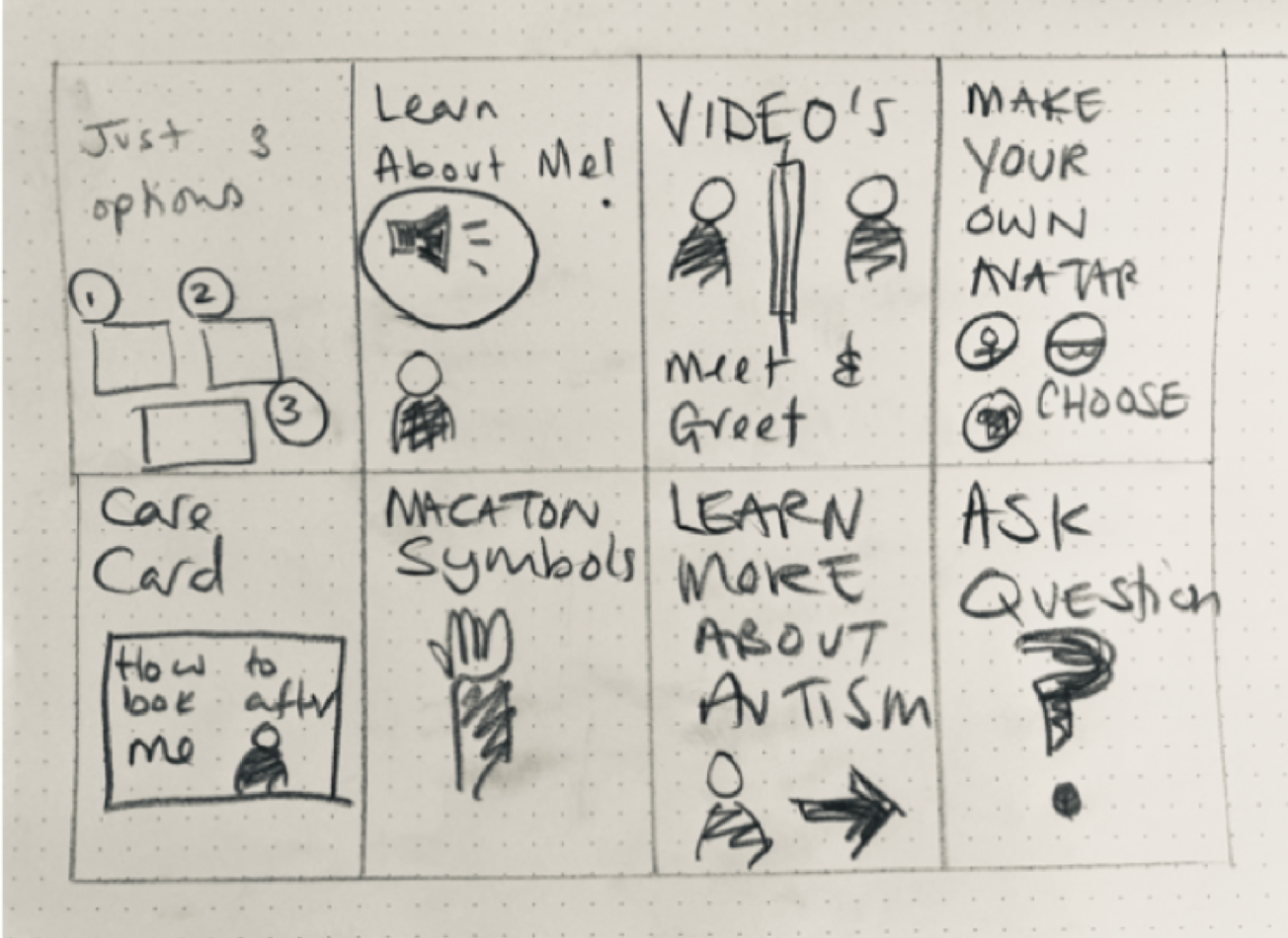
Example of a Crazy 8 Exercise from a participant
outcome
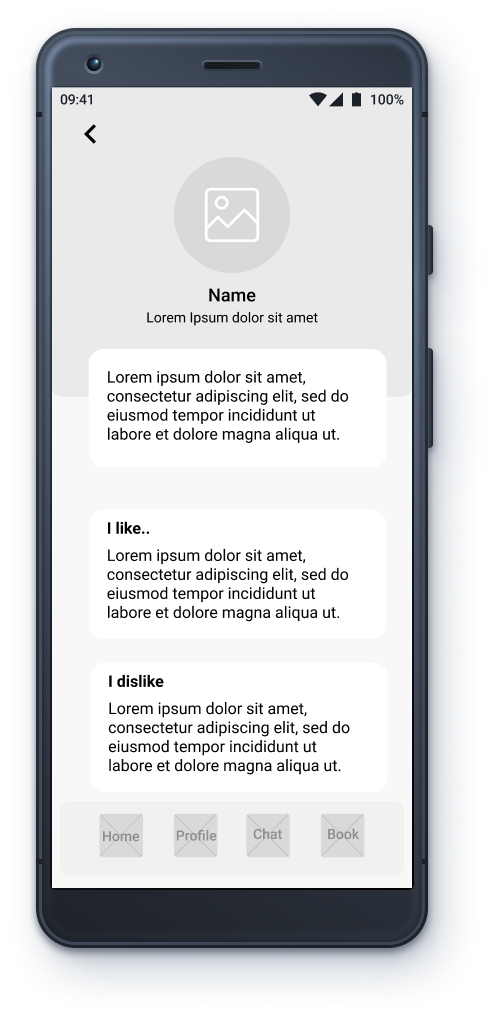
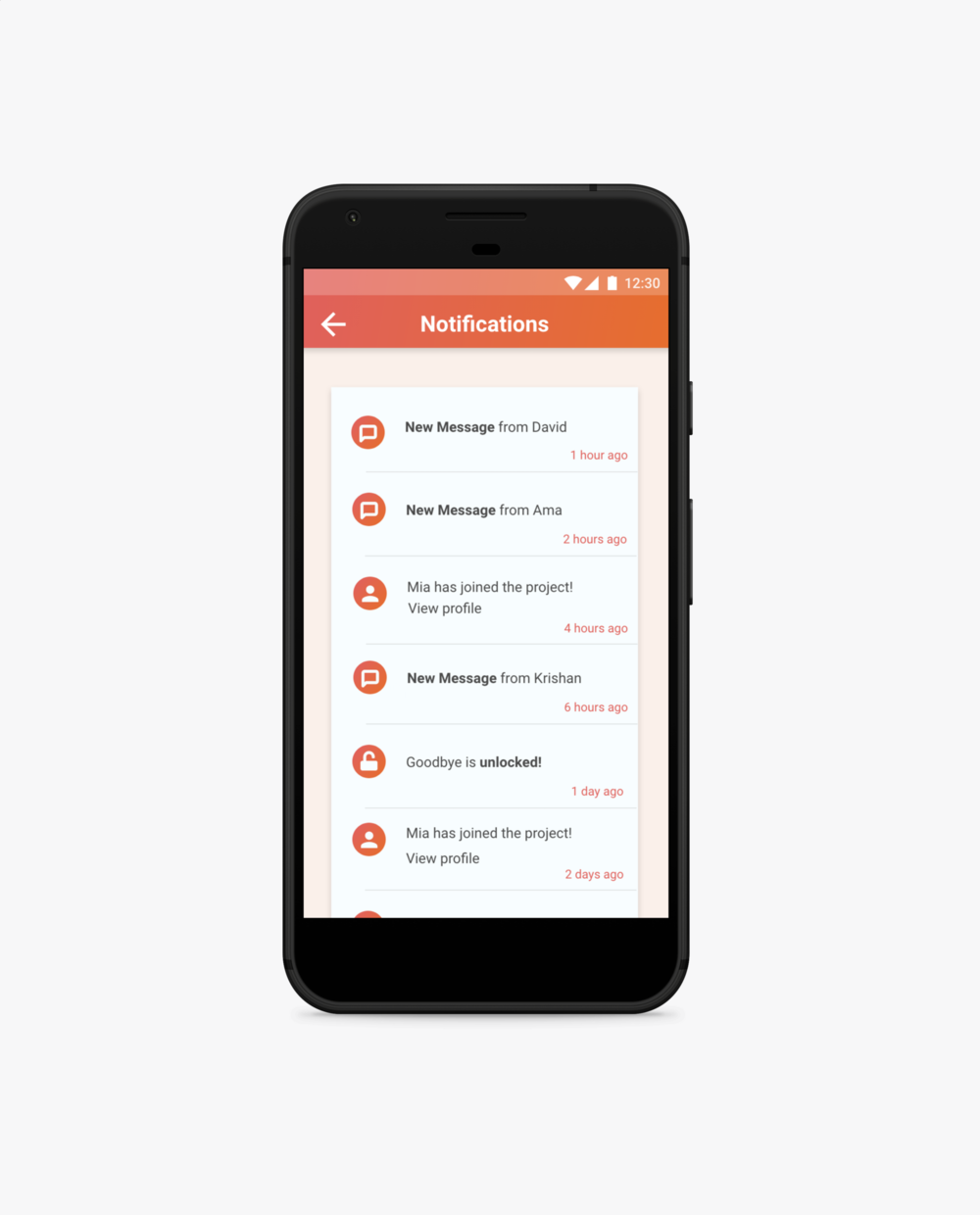
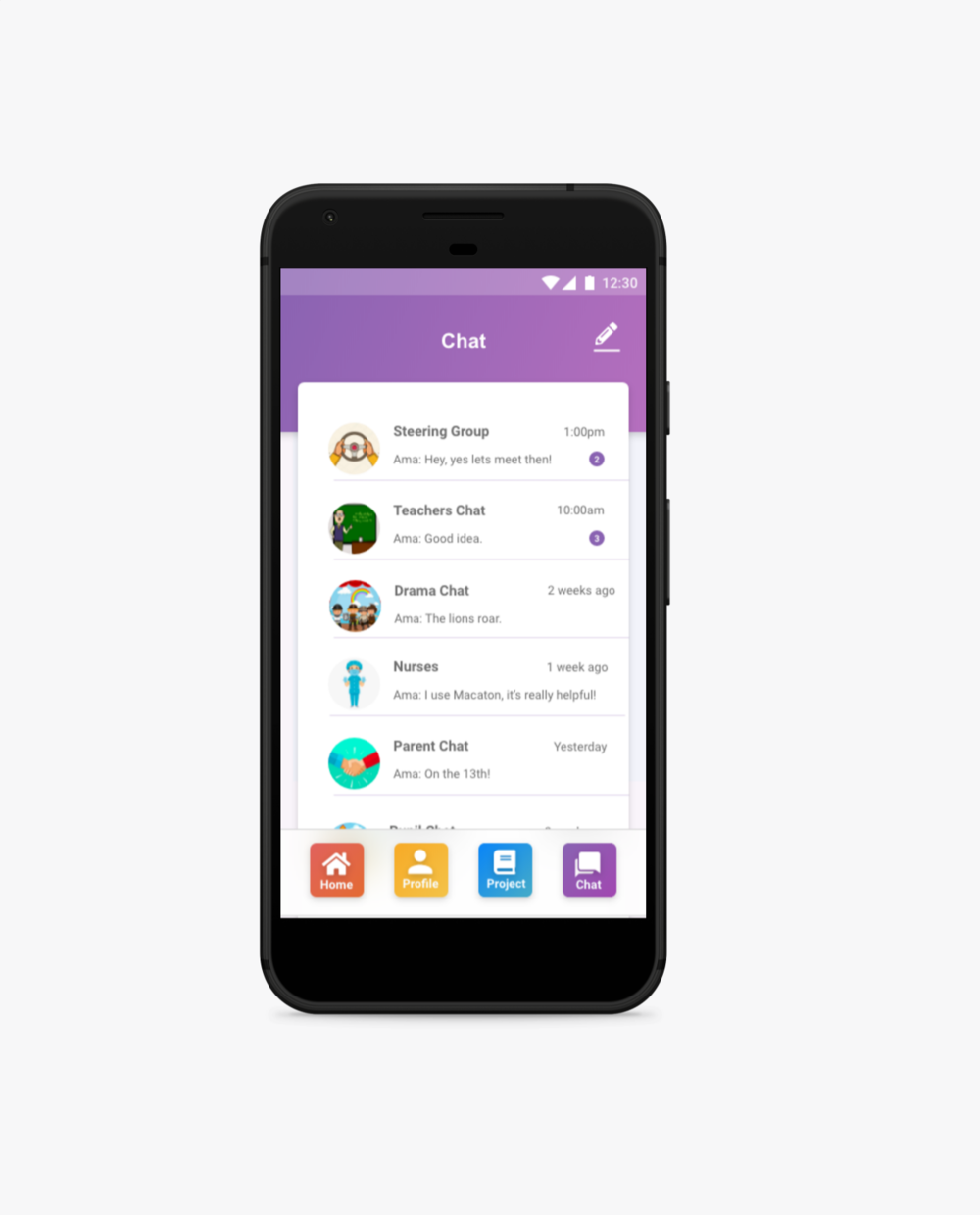
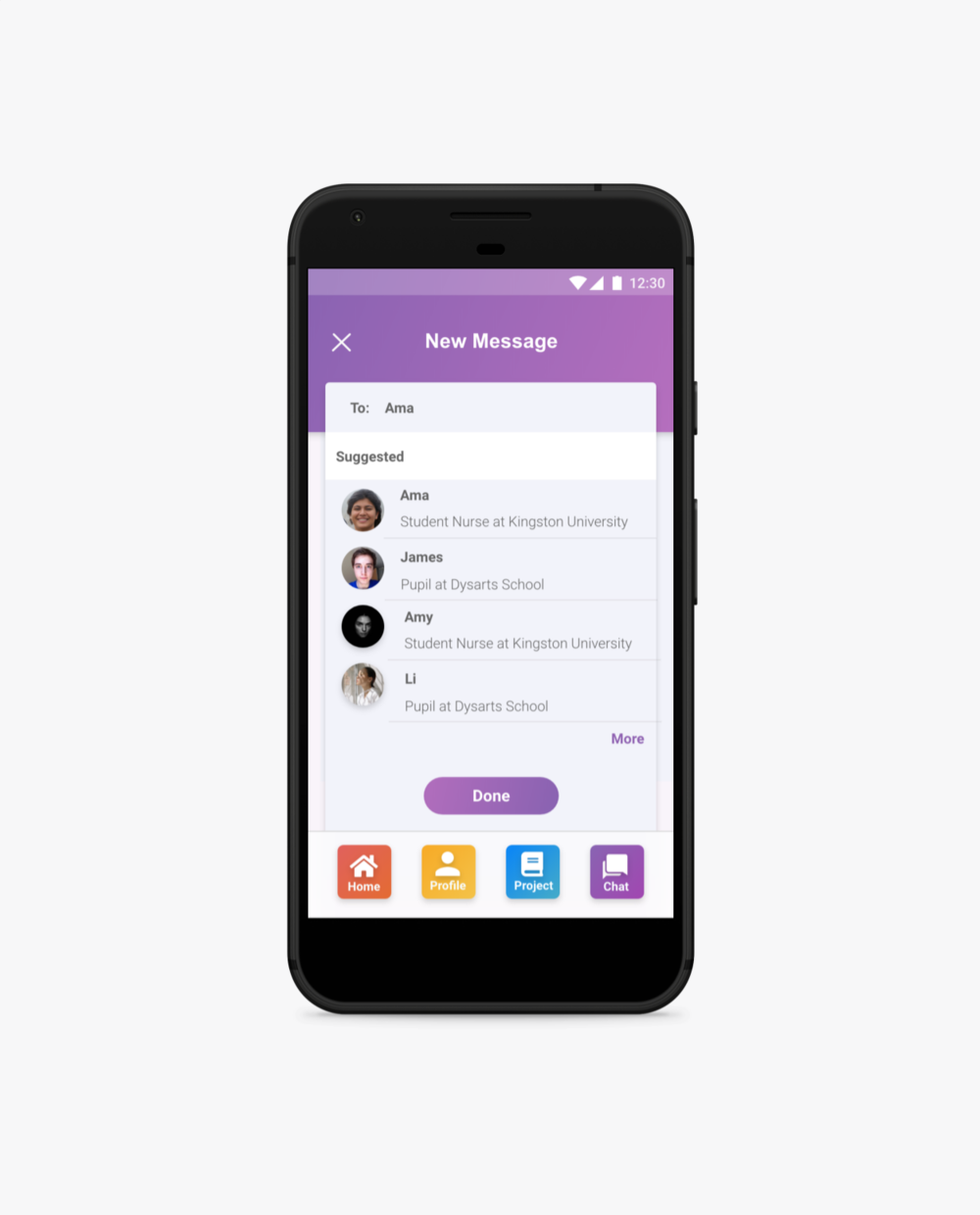
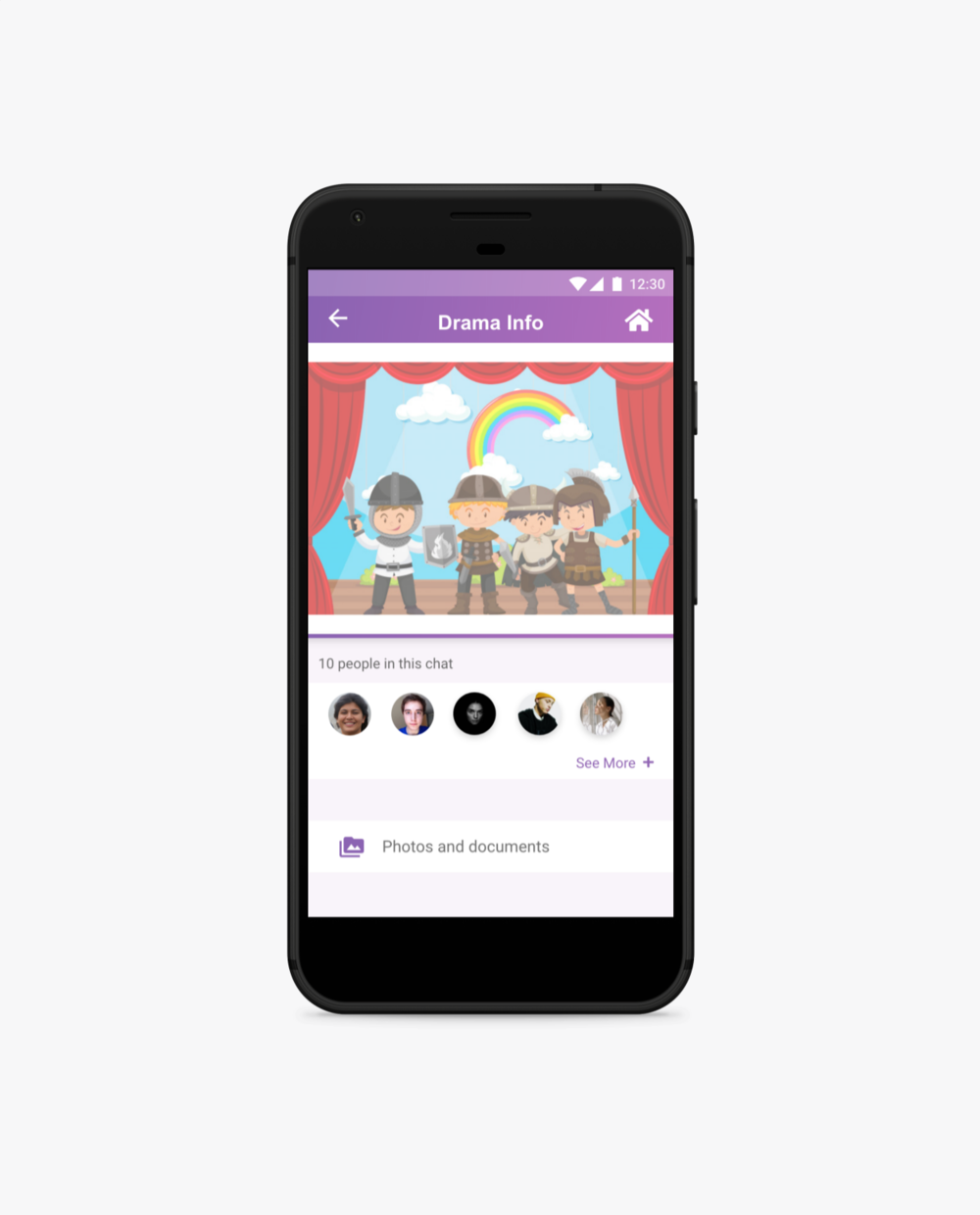
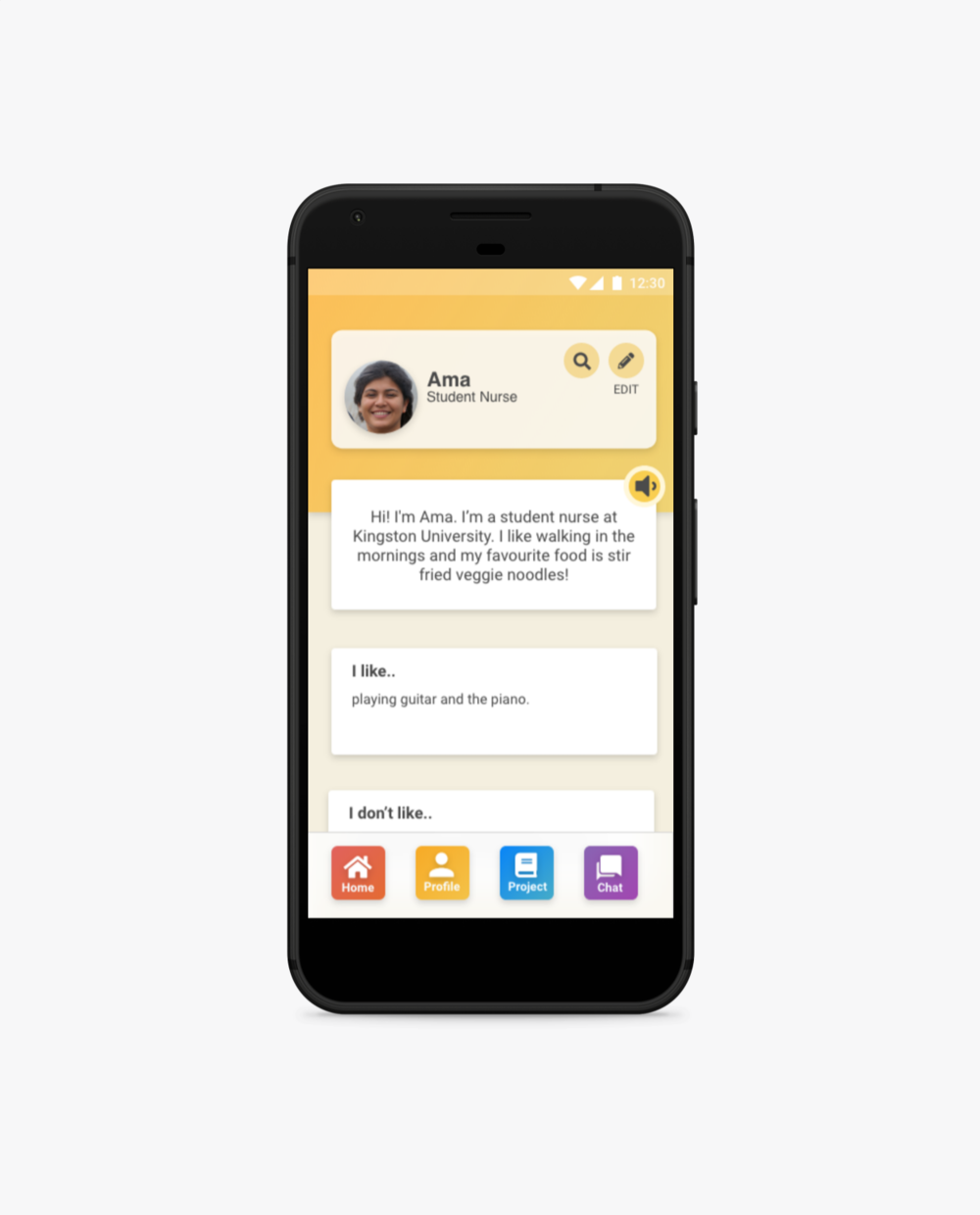
Main features - Profile section to learn about each other, messaging for communication, and project section including a digital version of the story.
To ensure usability for people with learning disabilities, the feature set had to be simple and fulfill the core needs of all users. To facilitate clear communication, we opted for a messaging platform as the primary channel, rather than fragmented communication that could be hard to follow. The profile section played a crucial role in helping nurses understand the children's needs and reducing their anxiety before attending the group and helped children view who would be attending. Lastly, a digital version of the story, complemented by visual aids, was included to stimulate engagement and help participants prepare.
prototyping & testing
accessibility & information architecture
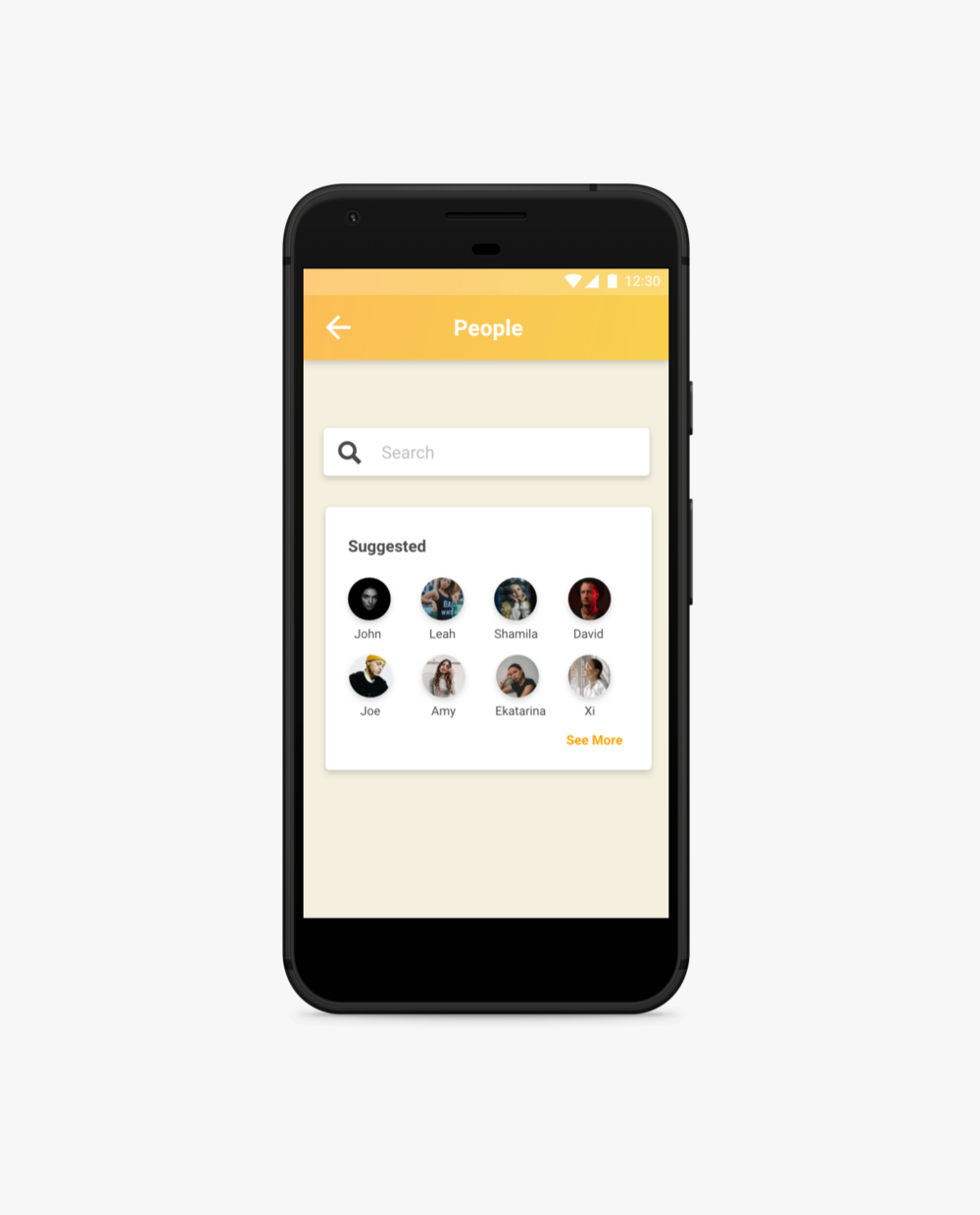
Simplicity is key. Larger buttons, text, app organisation by colour and prioritising the most important information first.
By following the W3 accessibility guidelines, I ensured that the app covered the essential principles for good accessibility for people with disabilities. This involved increasing text size and button surface area, keeping the architecture as simple as possible. Additionally I created step-by-step tunnels when entering information and creating a visual hierarchy for users to navigate. Since mobile devices were not very user-friendly, a tablet design would have been more appropriate. While tablet ownership was prevalent, not everyone had one. Therefore, it was essential to make sure that every person could access the app in its MVP stage, with plans to create a tablet version later on.
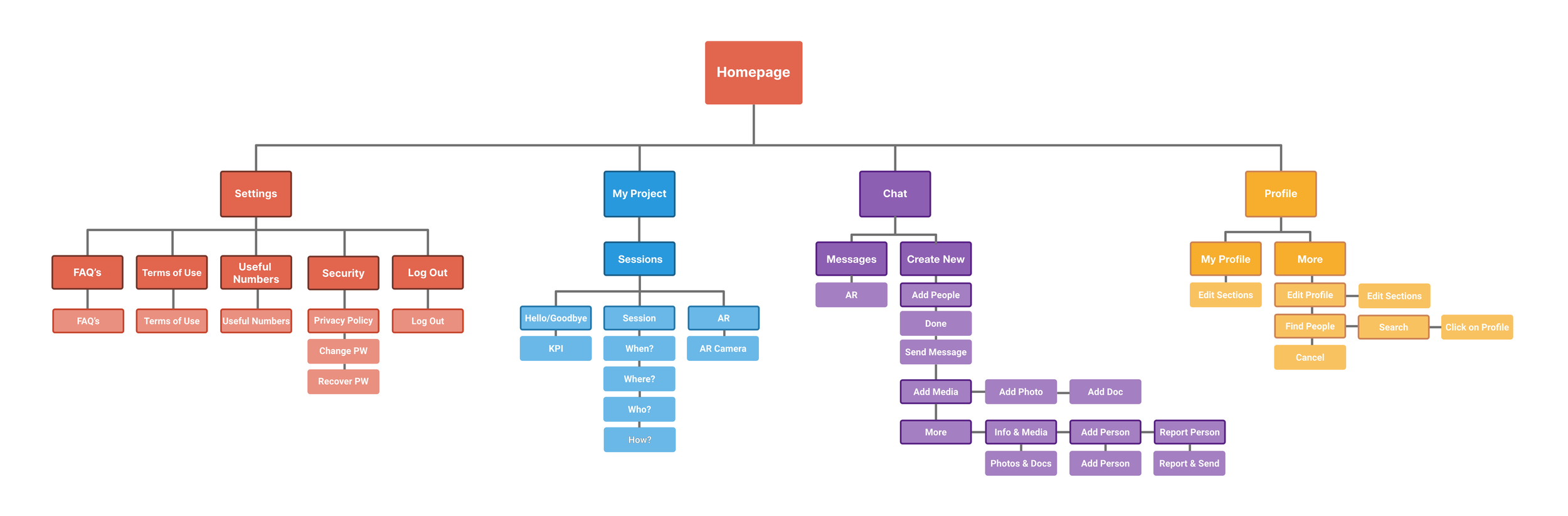
Simple hierachy
mid & High Fidelity
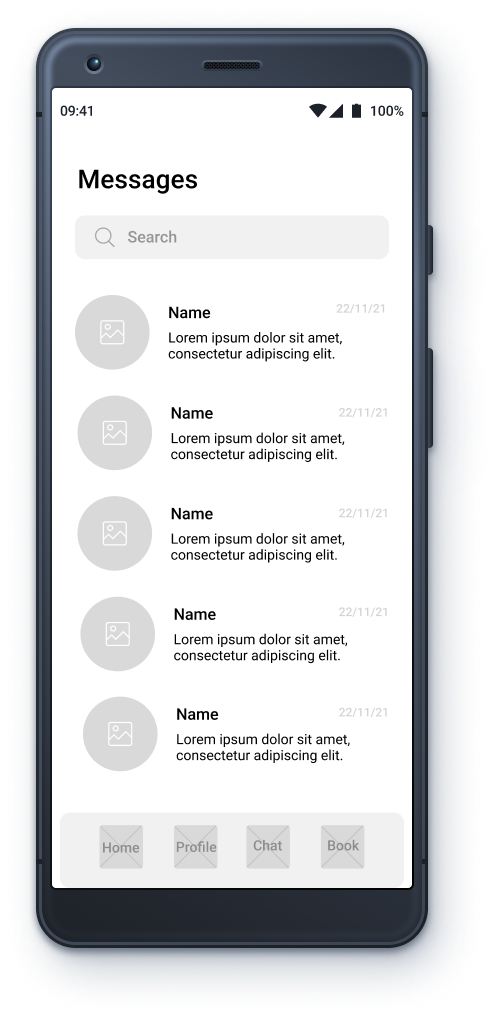
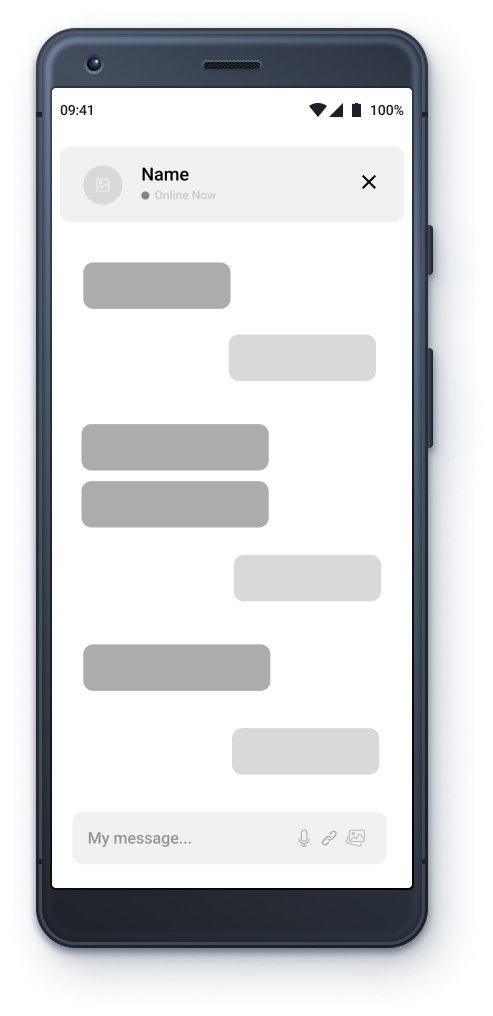
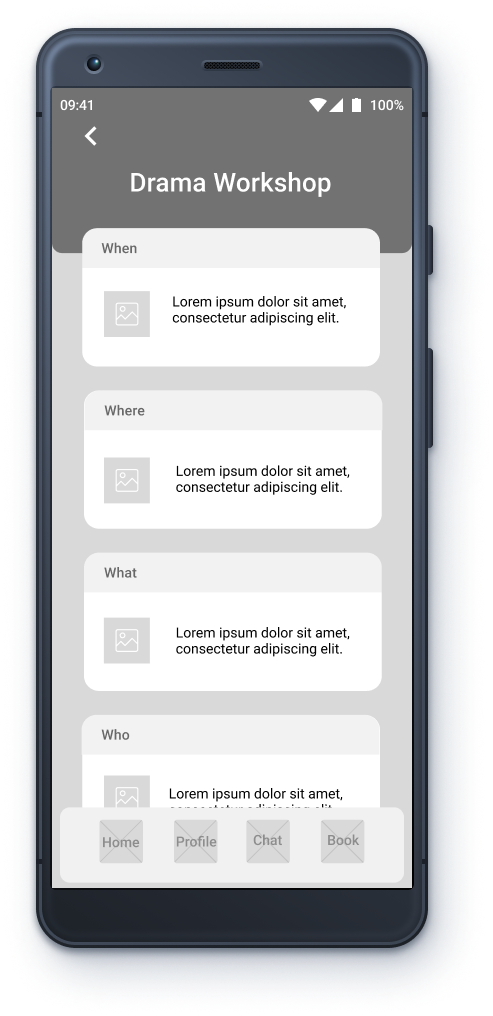
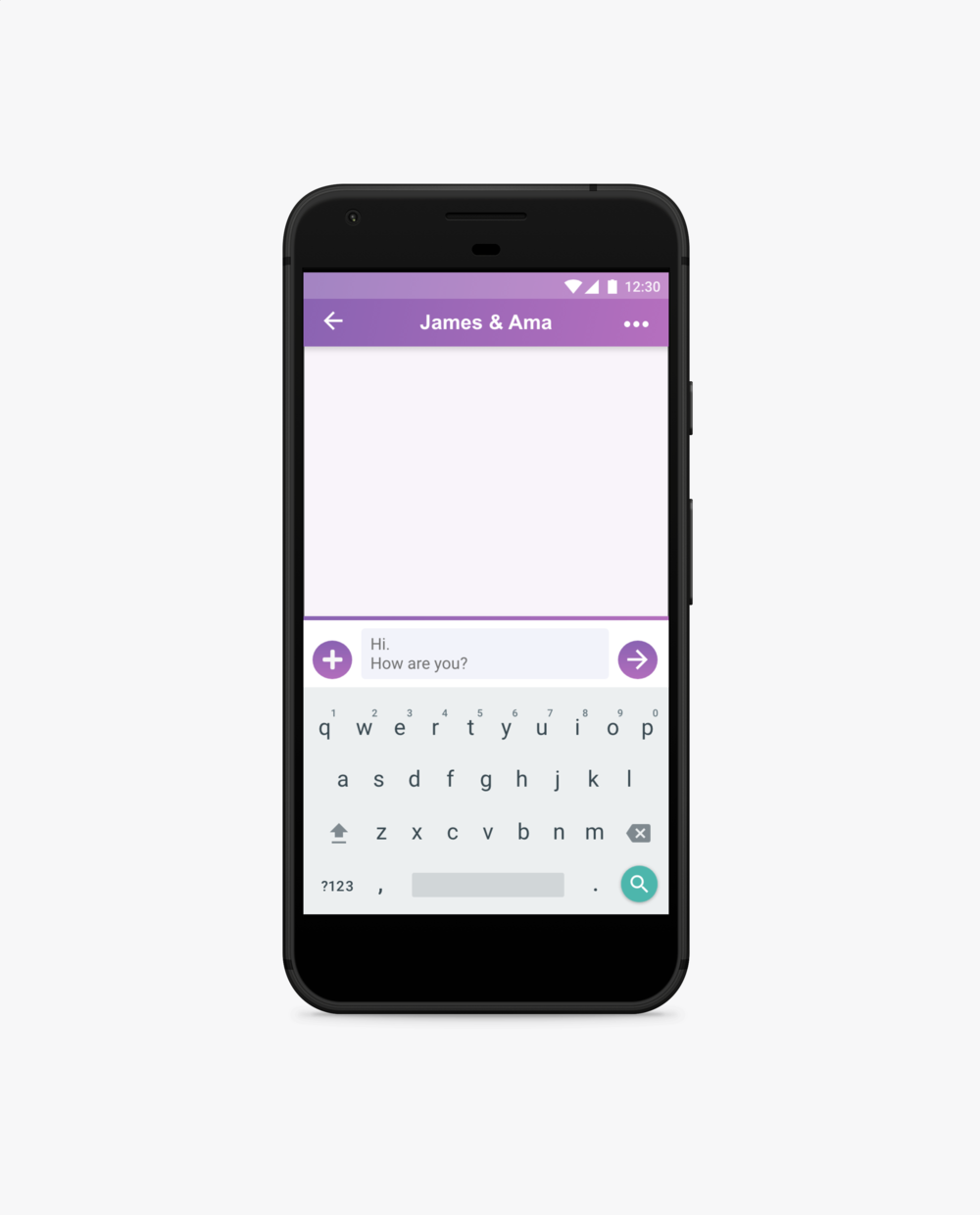
Two rounds of testing revealed the chat feature needed to be simplified and connected with industry standards to support usage.
By following the W3 accessibility guidelines, I ensured that the app covered the essential principles for good accessibility for people with disabilities. This involved increasing text size and button surface area, keeping the architecture as simple as possible. Additionally I created step-by-step tunnels when entering information and creating a visual hierarchy for users to navigate. Since mobile devices were not very user-friendly, a tablet design would have been more appropriate. While tablet ownership was prevalent, not everyone had one. Therefore, it was essential to make sure that every person could access the app in its MVP stage, with plans to create a tablet version later on.
Outcome
Successfully secured project approval from the University of East Anglia. Project handover to another UX designer to test the MVP.
The result of the final application helped the organisation to expand and have secured interest in the University of East Anglia to take the project forward at their University.
The next iteration will be phase two and will be tested within the next drama session. The AR was well received and will be an exciting part of their projects from here on.
Due to Covid-19 I was not able to test directly with the children within the project and tested with experts in disability nurses instead. This was very fruitful but it would have been advantageous to test directly with the participants of the project with learning disabilities. When safe to do so testing with the children with learning disabilities will be the next step.
for future iterations - AR Prototype
From our Crazy 8’s exercise the client wanted to incorporate a book to support the project with AR elements to increase engagement.
I prototyped a book and an AR prototype so the client could use this to try and secure funding to keep exploring how to improve the project and increase engagement from the SEN community.
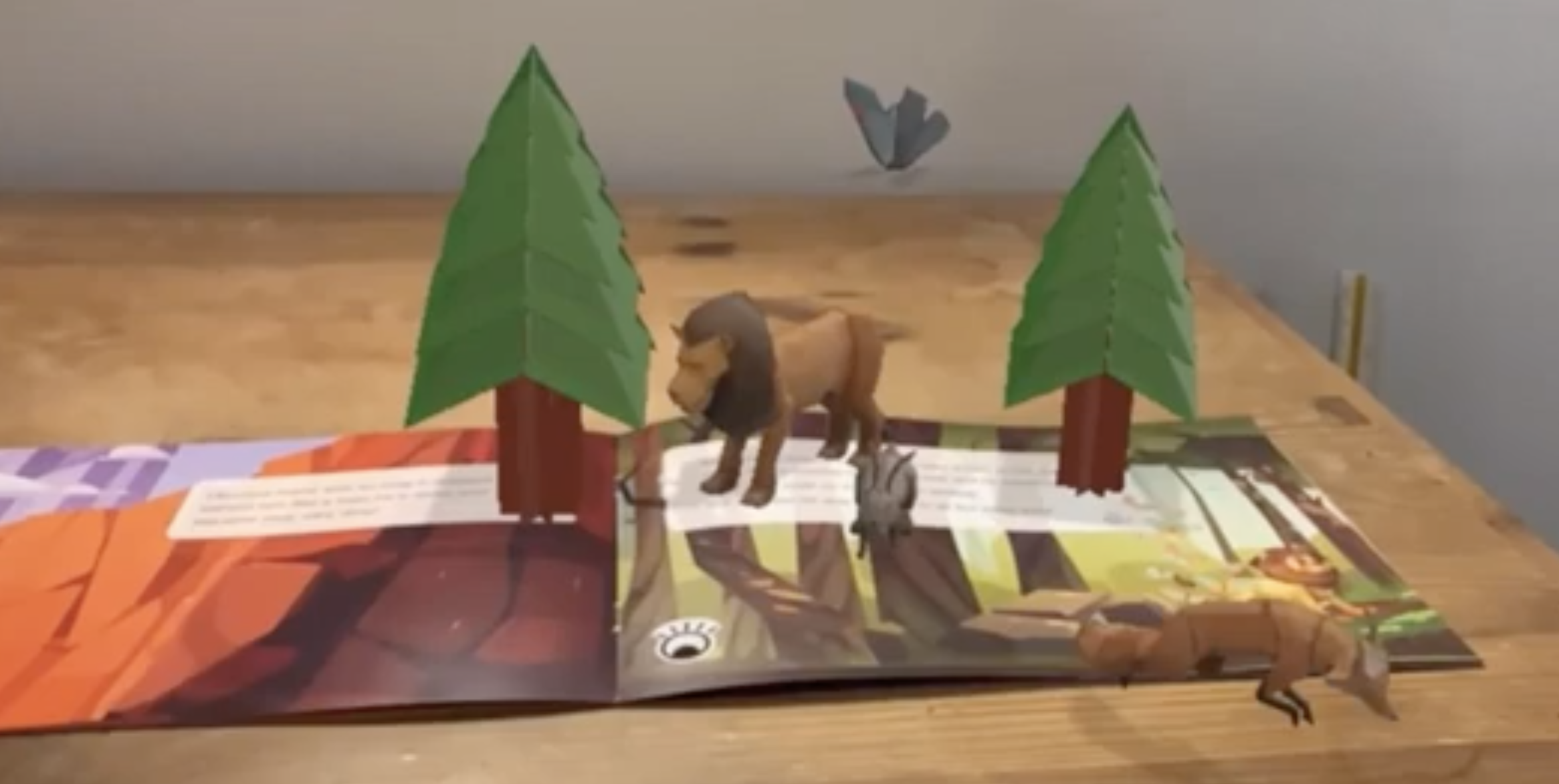
AR Elements to help being the story to life before the sessions
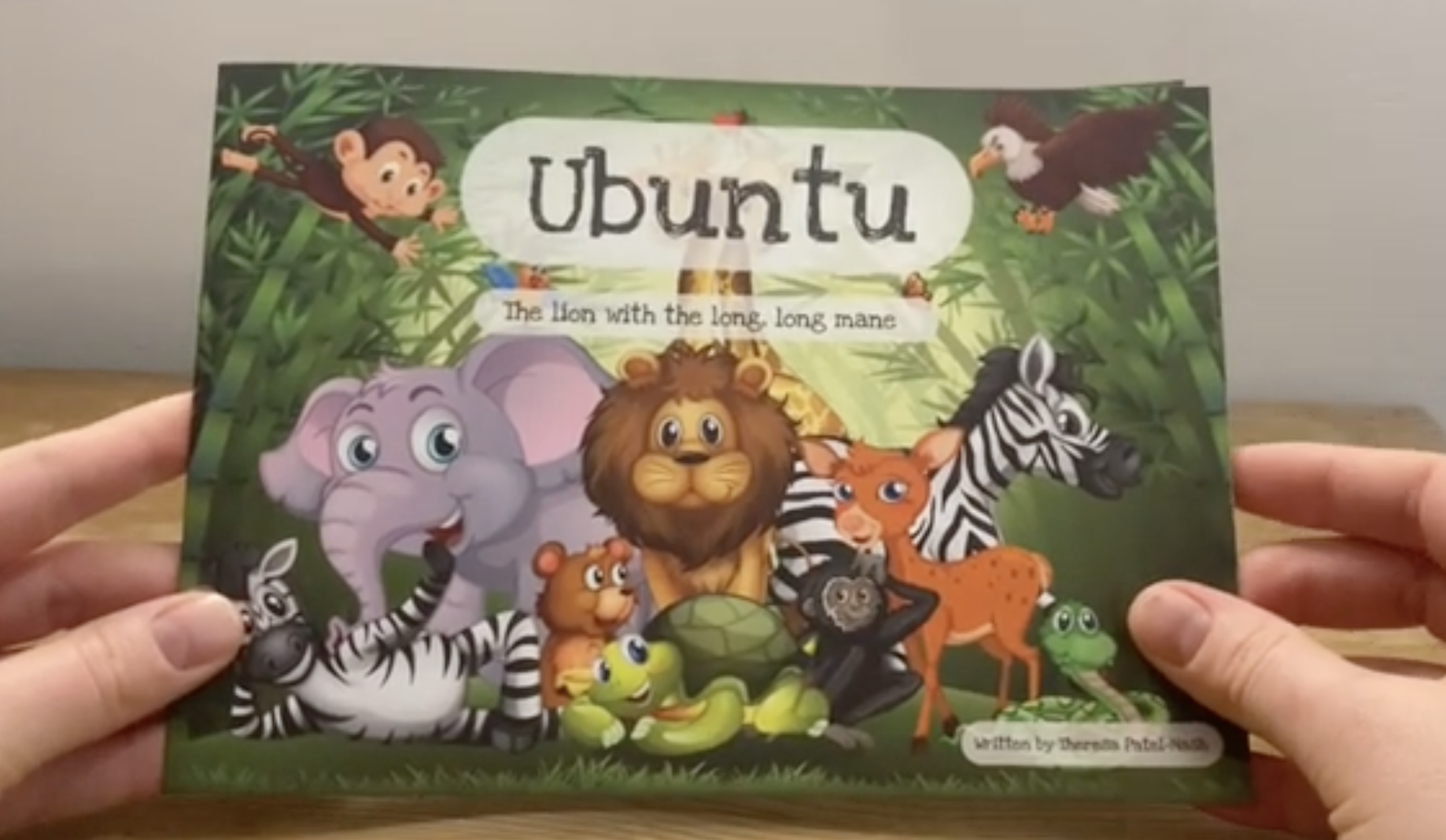
Creating a mock-up book to go with the prototype so the client could apply for funding