decarbonising commercial
real estate

Image: Midjourney AI
Who: Global Real Estate Organisation
What: Discovery, B2B, SAAS
Length: 4 Month Project
Why: A global real estate company is planning to launch a venture aimed at decarbonising the real estate sector.
How: Use exploratory qualitative methods to identify the pain points of the commercial real estate industry, with the goal of developing a platform to support it.
Project Summary
In collaboration with a global real estate company, our Mach49 team developed a venture to support the decarbonisation of the real estate sector, while also generating revenue. As the CX/UX designer, my primary responsibility was to identify the challenges in the decarbonisation process and identify who faced the most pain. Through open-ended interviews and storyboard testing, we found that the main obstacles were proving the return on investment, navigating varying legislation and subsidies, and developing a roadmap for implementation.
After multiple rounds of prototype testing, we found that an AI system producing a high-level carbon and financial report using past project data was the best solution to address these challenges. The system provides those who decarbonise assets with a quick analysis to prioritise carbon reduction measures with financial metrics, saving time and resources. By focusing on key pain points, we created an effective tool that simplifies the decarbonisation process and helps reduce carbon emissions and this was the feature chosen for entry to market.
Setting up the incubation
Challenge framing
Client workshop. Understanding the landscape through subject matter experts and key stakeholders to create a research plan.
TRAINING THE CLIENT TEAM
As a UX Designer, my responsibilities included leading research, analysing insights, and prototyping, as well as training the team in conducting open-ended interviews and working in an agile manner. This was done with the aim of enabling the client team to adopt a customer-centric approach and take the business forward if funding is secured to build the venture without Mach49.
Round 1&2 - OPen-ended interviews (12 participants)
Prioritising Asset Managers over Sustainability Leads as the pain is more acutely felt and Asset Managers are the key decision makers.
I conducted open-ended interviews to understand the stakeholders' priorities and main challenges of decarbonising their assets. Working with a User Researcher I was tasked with focussing on Asset Managers, my analysis revealed they faced more financial pressure than Sustainability Leads, making reaching Net-Zero a critical issue for them. Categorising stakeholders into Starting Out, On the Path, and Leading, I discovered a correlation between pain points and an organisation's maturity level in reaching Net-Zero. Based on our findings, we recommended focusing more on the Nordics, where those starting out and leading experienced the most significant pain points. As the Nordics were more advanced in their decarbonisation journey, they were an ideal starting point for our project.
To launch the project, I facilitated a challenge framing workshop with the client and Subject Matter Experts (SMEs) to establish a project direction and gain a broader understanding of the problem. The workshop aimed to challenge assumptions and provide direction for the research plan. We identified the key players that could potentially be impacted by seeking to achieve carbon neutrality and explored many assumed challenges. Additionally we discussed the different states on the markets as it related to decarbonising Real Estate. The participants voted for the most relevant roles to consider - Asset and Sustainability Managers and we decided to focus on the European market.
Training the team on asking open questions, checking your bias and probing whilst helping understand the lean methodology.
Discovery
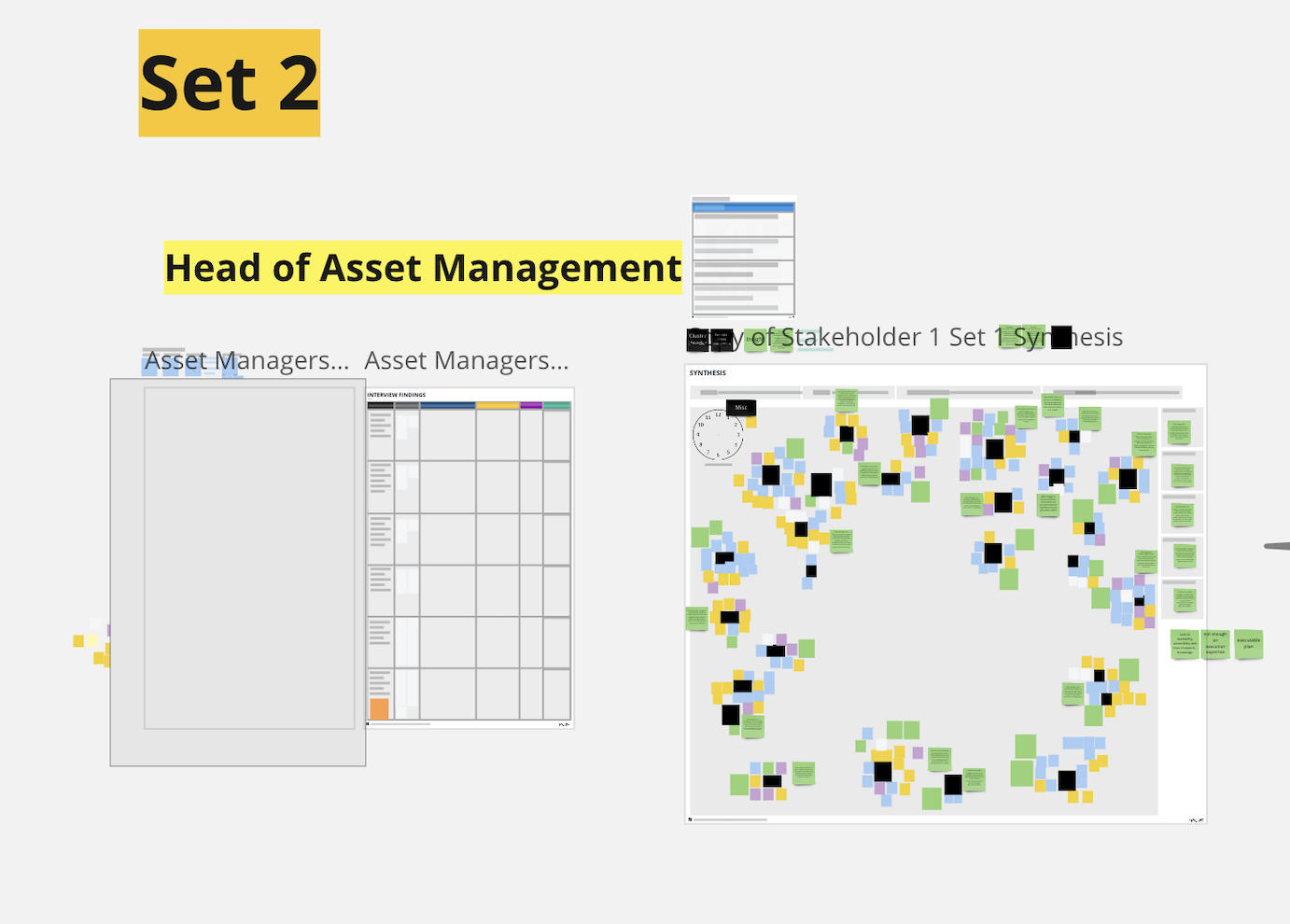
Round 3&4 - OPen-ended interviews (12 participants)
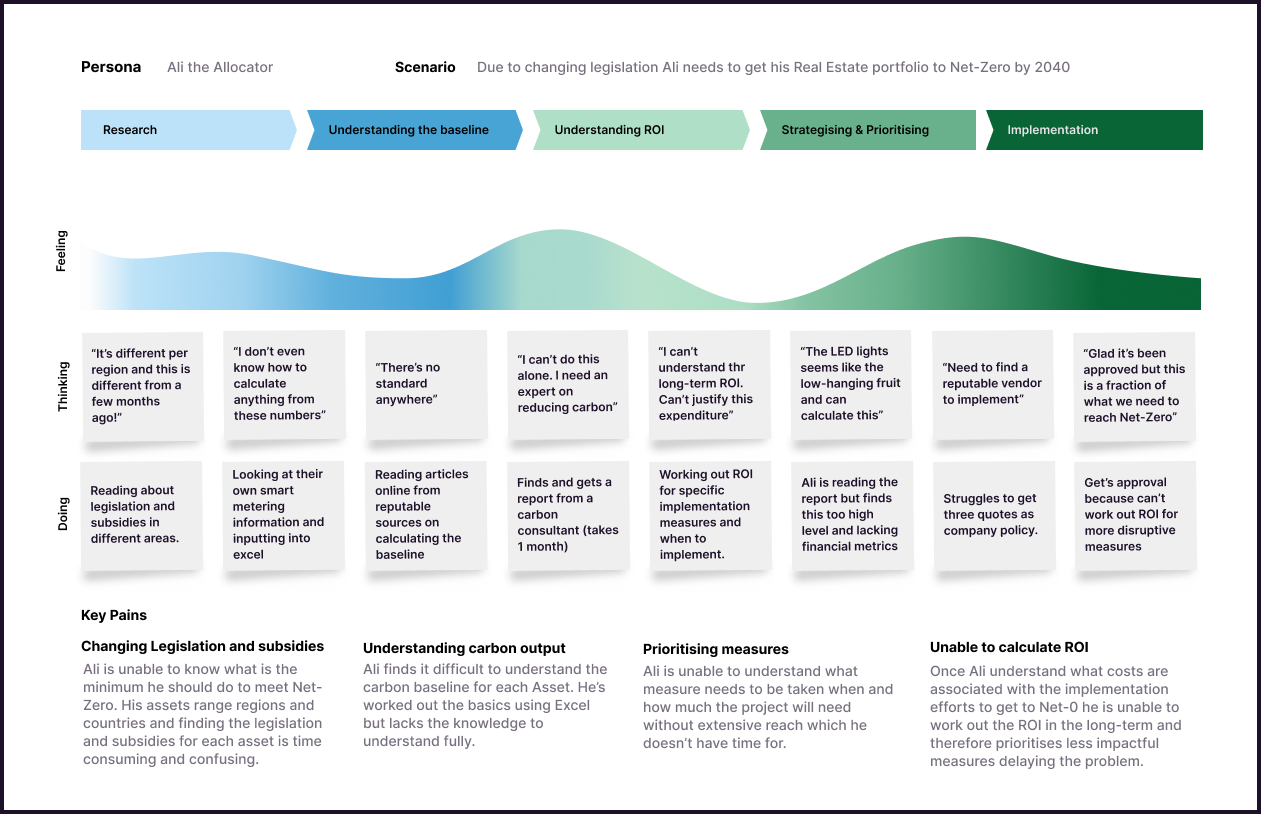
Asset Managers feel multiple pains along the journey to decarbonisation, the process is expensive, time consuming and frustrating!
When synthesising the data with the core team, it was clear that within this sector and topic area there were multiple challenges and pains. Asset Managers found it difficult to understand new legislation, work out their carbon output, time was an issues when waiting for reports from carbon consultants and when receiving them not having the financial metrics they need to prioritise a plan. Working out a plan per building was expensive and time consuming. Asset managers needed help prioritising and making decisions through data in order to start their journey to Net-0.
define
GETTING TO THE ROOT CAUSE
Leading a define workshop including the five why’s exercise to try and get to the root cause of the problem.
Prototype testing
Low-Fidelity Prototype testing to find potential pilot customers and in/validate our hypothesis (30 participants in total, five iterations)
VALUE PROPOSITION TESTING
Through open ended interviews. I was able to identify 10 key pains for Asset Managers. The next challenge was trying to identify the root cause and drawing insights from the data. Essentially asking the “Why?”. I facilitated a prioritising pain workshop, I facilitated the five why’s workshop along with looking at the frequency over severity of each pain. Lastly we prioritised and debated what will be prevalent in the next 10-15 years and what would be solved through government legislation for example in order to focus on the problem we wanted to address to build a venture upon.
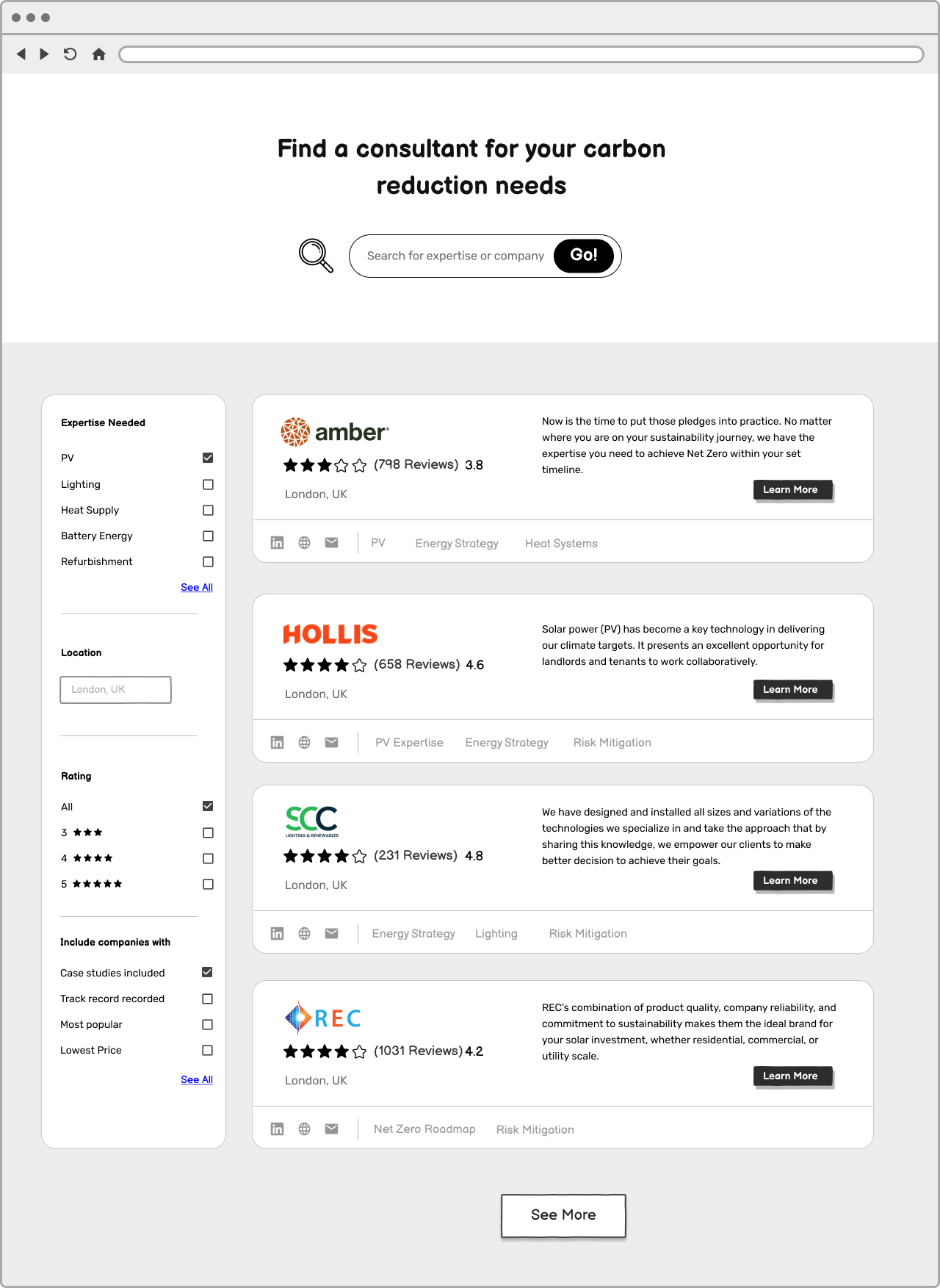
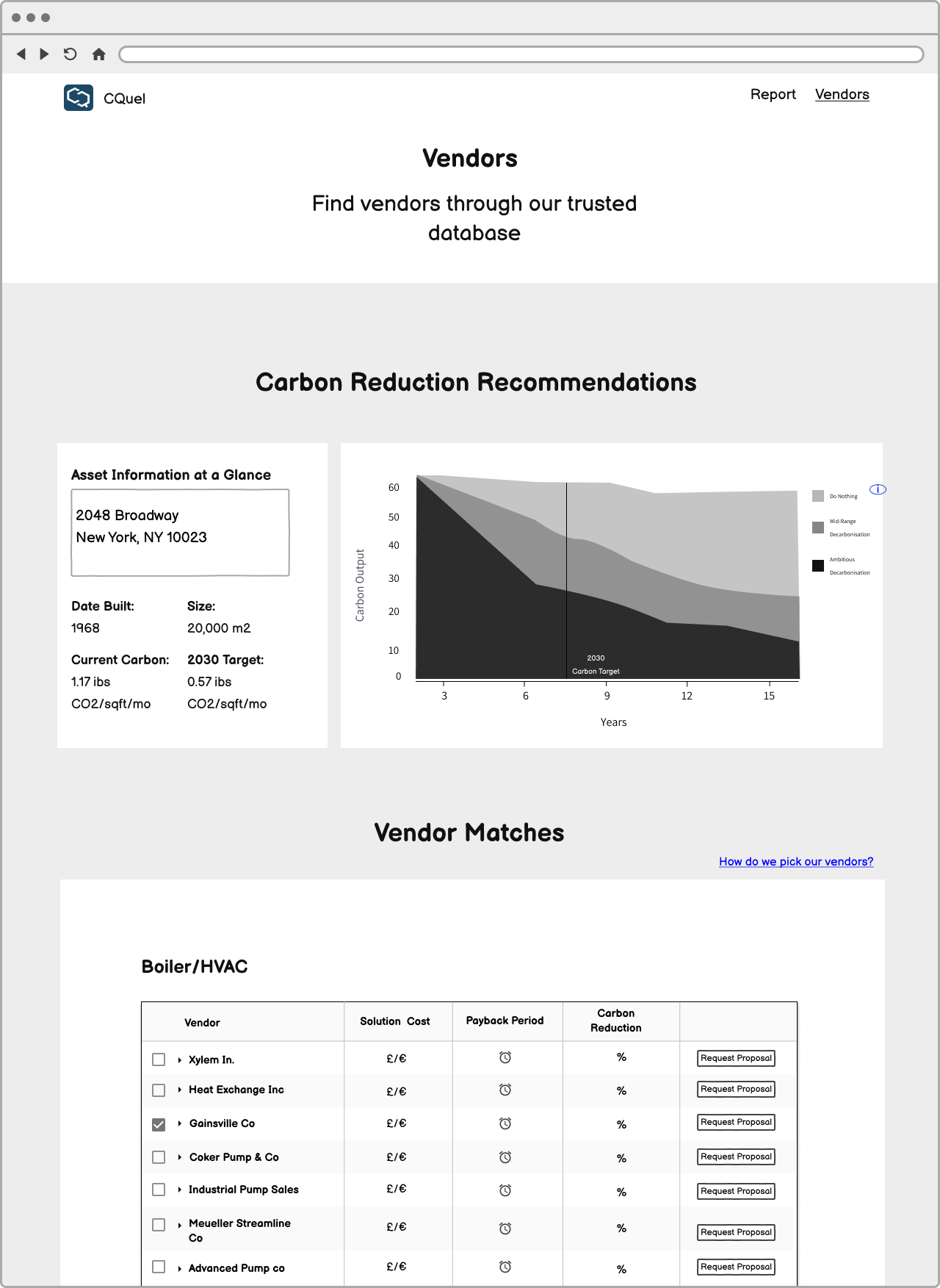
During the course of my work, I developed a total of five prototypes to test three different value propositions that had shown promise in our testing. My primary goal during prototype testing was to determine whether our hypothesis that users needed support and lacked understanding to prioritise their implementation efforts was valid or not. In collaboration with the Product Manager, we also aimed to identify an entry to the market, which included identifying the most helpful stand-alone feature and potential additions to the product roadmap. I also worked with the team to identify and test risks.
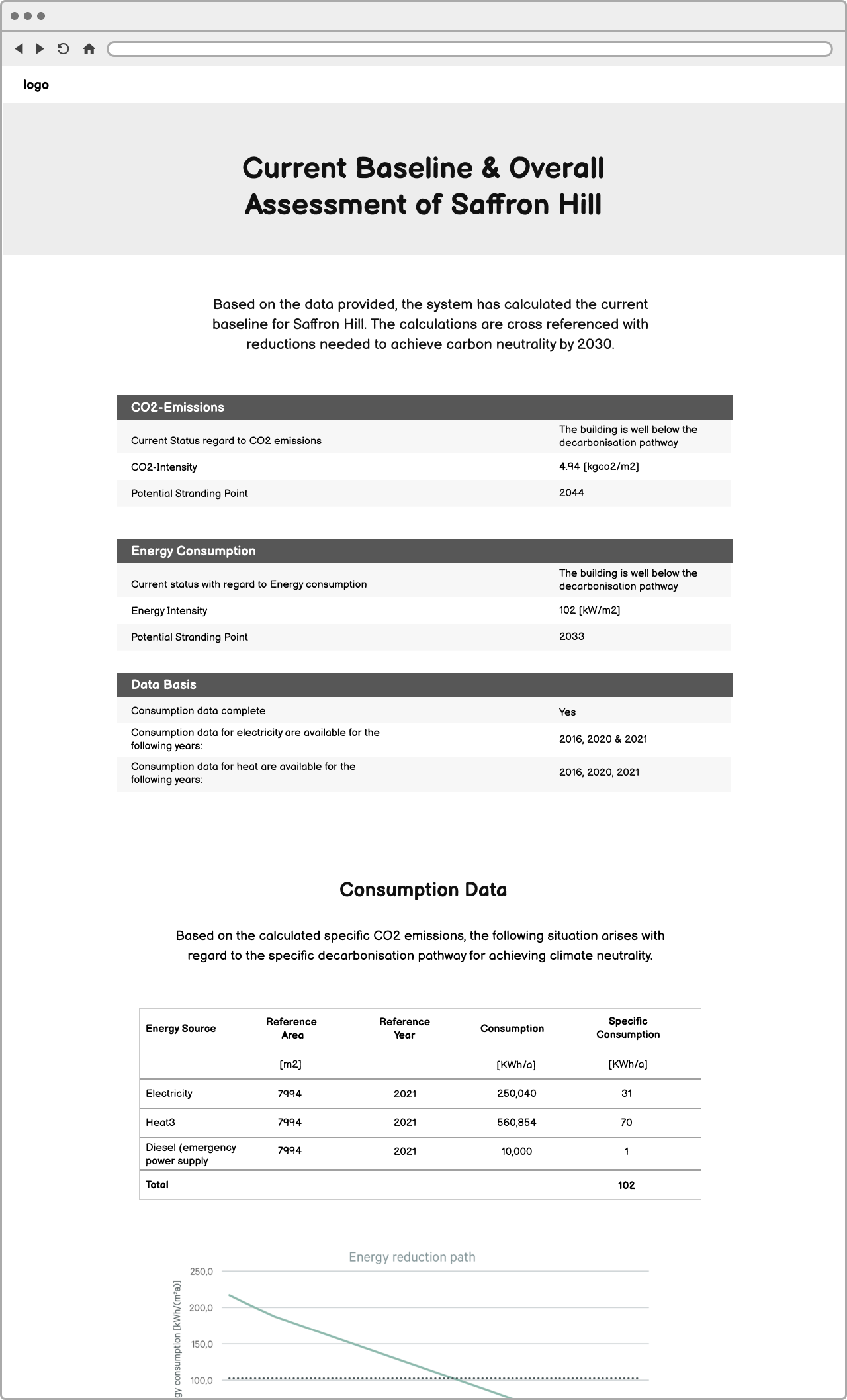
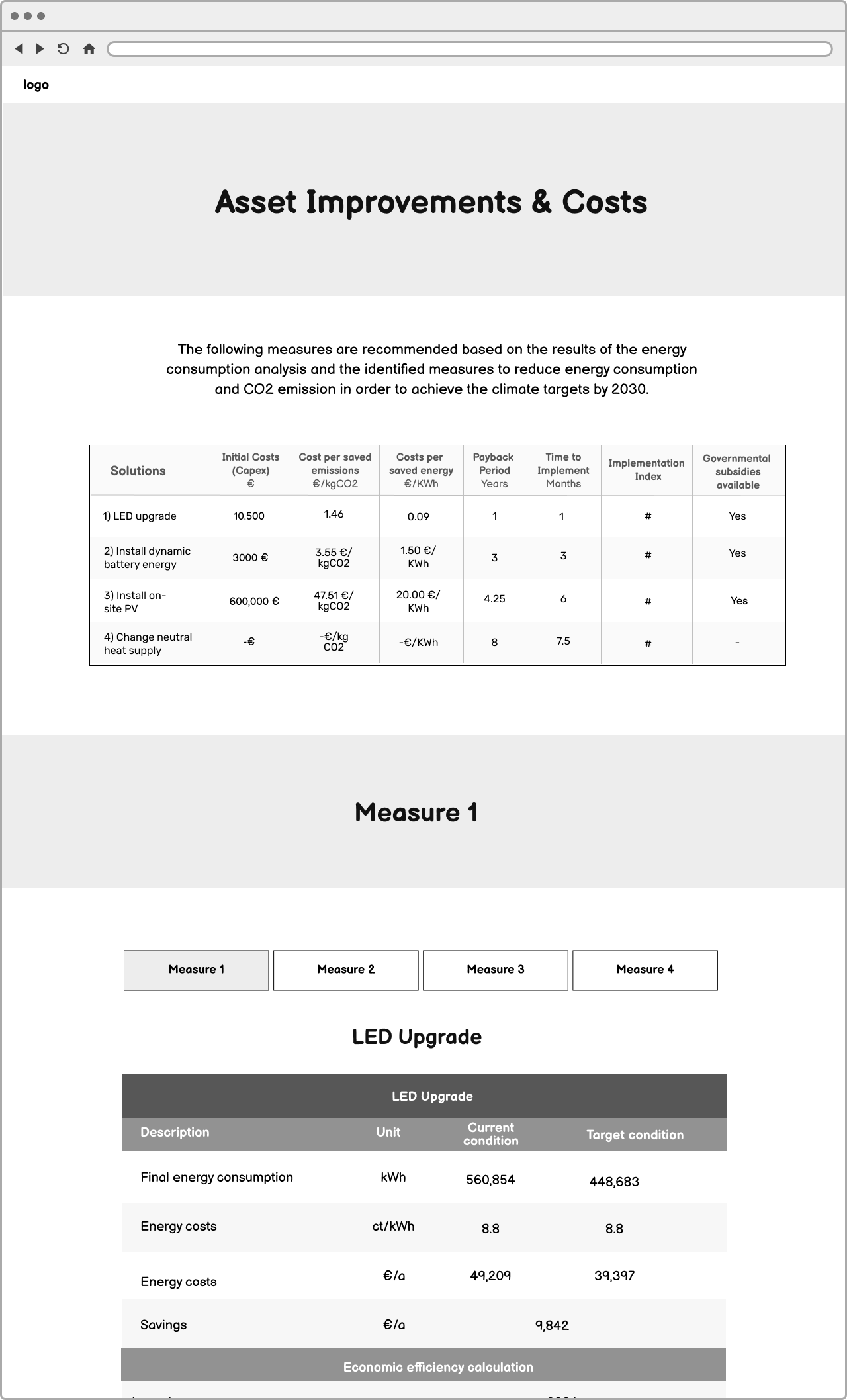
Mid-Fidelity: MVP
Mid-Fidelity: Additional features for Roadmap
The outcome
The team secured €600,000 for the first quarter for additional tests and marketing and additional funding after proof of concept.
After our team presented the benefits of our proposed product to the board, they approved the venture. We outlined the feature set and its potential value in the market during our pitch. To ensure a smooth transition, I developed a handover plan, a sample UI, and my design system for the team to take over and execute the product design in detail.
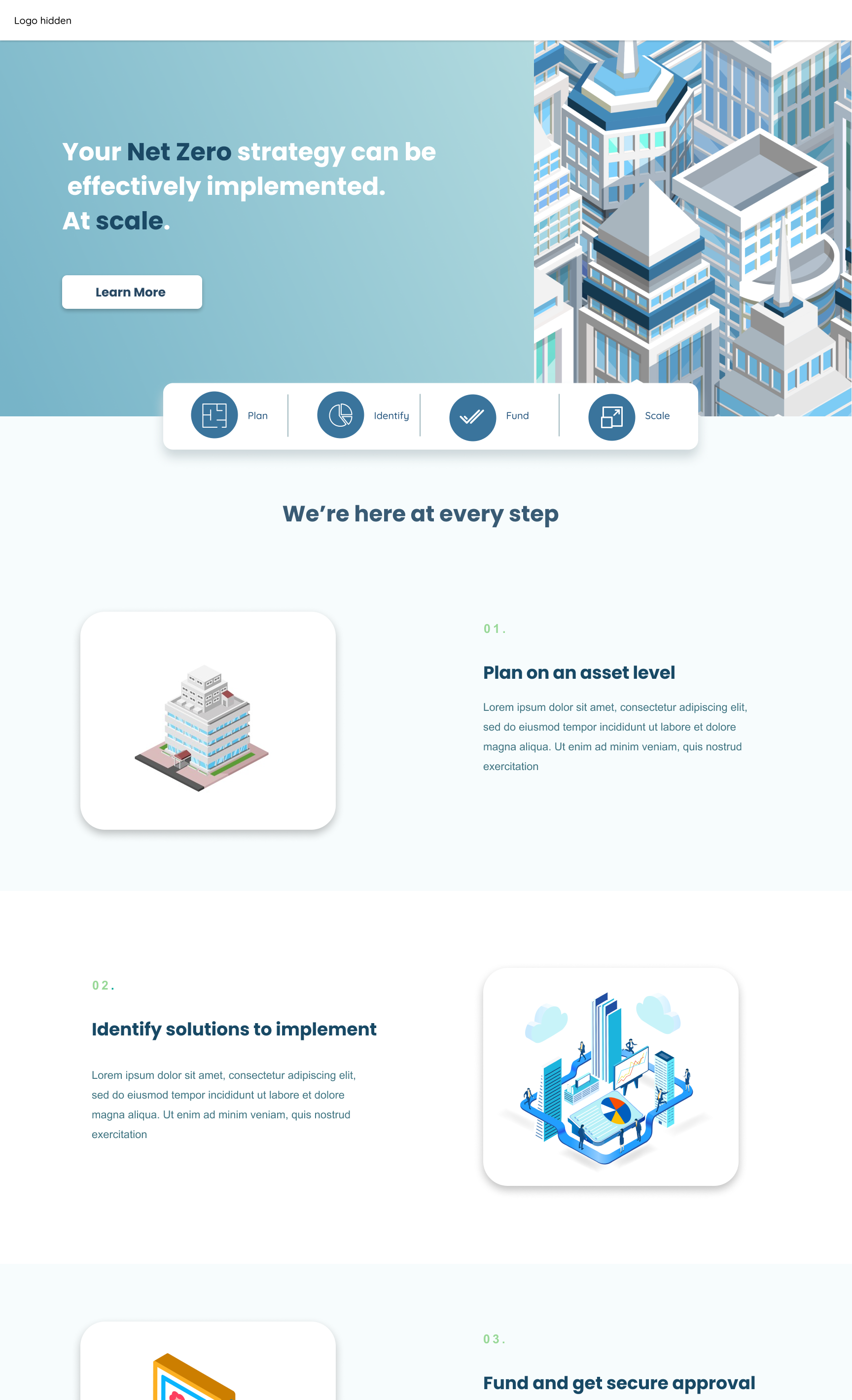
As I wrapped up my involvement with the project, I was tasked with designing the landing page as part of the marketing initiative and for pilot customers to sign up.
Once approved: time to get pilot customers
Before handing over the project to the accelerate team. My last task was to design a landing page for marketing and pilot customer sign up.
Prioritising pain
The key pain for Asset Managers is having a lack of financial and carbon data to prioritise implementation efforts and get approval from investors.
I facilitated a workshop with the client team to analyse the pains of participants. While we had a basic understanding of their surface-level pains, we used ‘the five why’s’ to uncover the root causes. One example is that we identified ROI as a pain point because participants were struggling to calculate it, leading to a lack of understanding of how their expenses impacted their investment returns. In turn, this made it difficult for them to secure approval from investors.
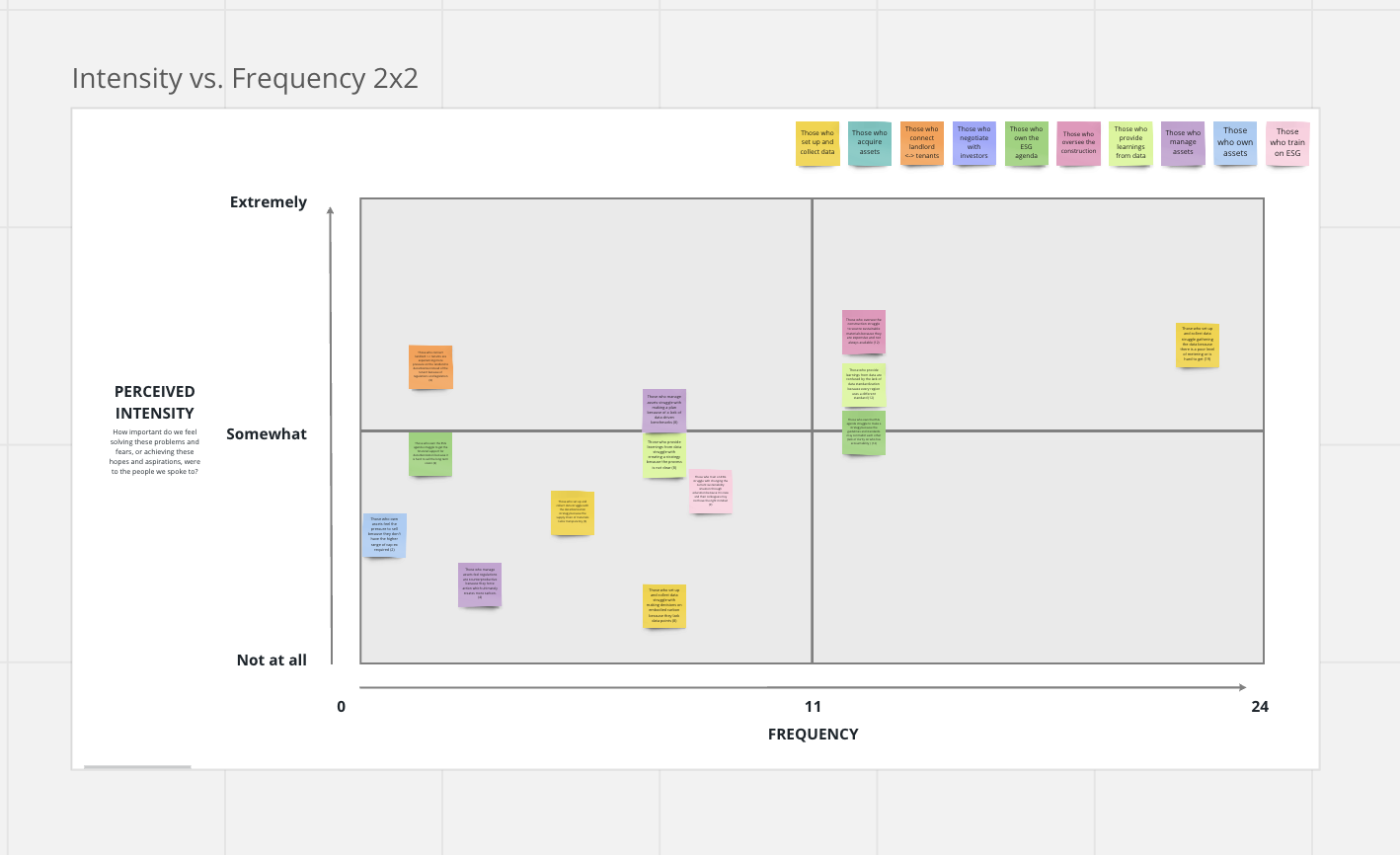
To further explore our findings, I introduced the team to an intensity vs frequency matrix, and we also created a matrix to distinguish between short-term and long-term pain points. Through this process, we discovered that the ROI pain was both the most frequent and intense issue for users. Additionally, we identified certain pains that would naturally resolve within the next five years (e.g., clear decarbonisation legislation) versus those that would persist for years to come.
I facilitated an ideation workshop with the client team to address the main challenges and pains faced by participants, which included ROI, understanding their carbon baseline, and lack of knowledge about Net-0 implementation methods. We brainstormed potential solutions using "How Might We?" questions and assessed them using dot voting. The most promising solutions were further tested through storyboard testing to evaluate their desirability.
Problem Statement
Asset managers face challenges in making informed decisions regarding the decarbonisation of their portfolio due to a lack of expertise and data. This limits their ability to develop a strategy that would effectively communicate the necessary return on investment and capital expenditure required for successful Net-Zero initiatives to their investors.
Ideate
Brain-storming & dot voting
Top voted concept to take forward - AI system to generate a carbon baseline, give implementation options and show a cost-benefit analysis.
Before proceeding with prototype testing, it was important to assess the desirability of the solutions we had developed. To achieve this, we presented high-level storyboards to participants and observed their reactions. This allowed us to not only test desirability but also engage users and find other needs relating to the value proposition. Participants were able to provide valuable feedback on what they would need from the solution and what was missing.
During synthesis, we identified several themes that emerged from the feedback we received. People needed a high level roadmap to make decisions, an analysis of cost to show investors but also an understand of who could implement the solution for them in such a nascent field. As a result, we were able to create a robust feature set to test.
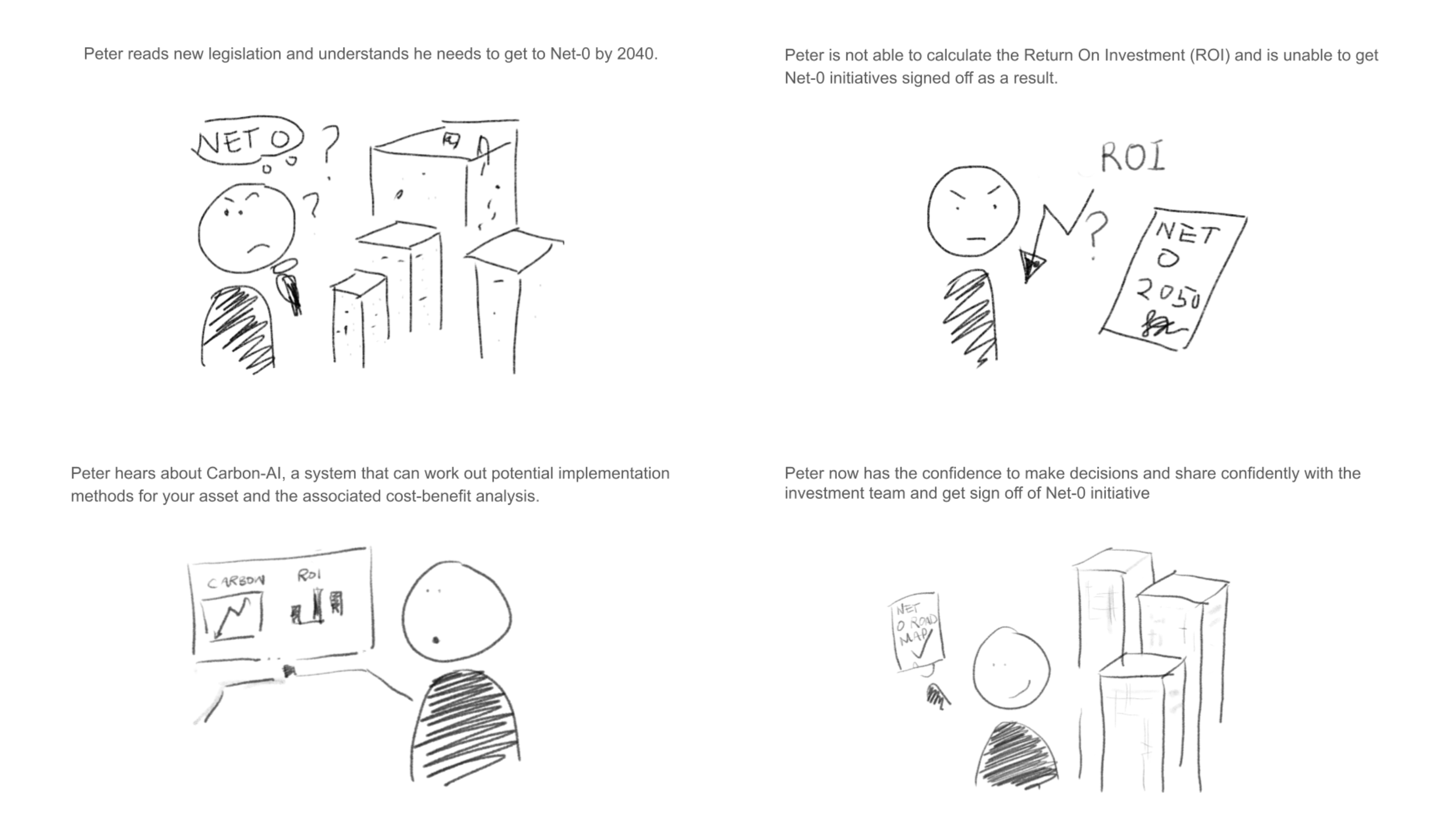
Testing desirability with 25 participants - Users resonated with the value proposition of a high level road map and uncovered new insights.