mach49 — venture building
A sector unprepared for net zero
Working as part of Mach49's venture-building team, the research shaped a product to support the decarbonisation of commercial real estate, helping a global real estate organisation navigate new Net Zero legislation while generating revenue.
Role: Senior UX Researcher & Designer
Deliverable: Venture Research & Product Strategy
Impact: €600k funding secured (venture still active)
Problem: Asset managers couldn't justify the expenditure for Net Zero initiatives without a clear ROI case — leaving them stuck between investor pressure and regulatory obligation.
Organisational Context: The current solution was expensive, asset-by-asset consultant reports — too slow and too costly to scale.
01 — The Problem
Senior leaders knew legislation was coming but struggled to justify acting early. Asset managers, responsible for the financial performance of property portfolios on behalf of investors, couldn't decarbonise without a clear return on investment. Without it, securing sign-off from investors was nearly impossible.
When organisations did move forward, most hired carbon consultants to evaluate each building individually. Reports took months to arrive, ran to hundreds of pages, and few had the time to work through them. When they did, the technical language was difficult to interpret and the financial metrics needed to prioritise next steps were nowhere to be found. Expensive, slow, and still no clear plan.
The bigger picture was a portfolio problem. Asset managers needed to understand how to decarbonise multiple buildings at once, not one at a time.
02 — Research Questions
The brief was broad: decarbonise commercial real estate, find the pain, and work within Scope 3 emissions — the indirect greenhouse gases produced by a company's activities from sources it doesn't directly own or control. Unlike a project with a defined problem and user group, this engagement started with a sector and an open question. Framing the right research questions was itself part of the work.
I led a stakeholder and SME (Subject Matter Expert) workshop to establish which markets mattered most and who within those markets felt the most pain, before a single interview took place. Secondary research on emerging legislation and scope 3 emissions helped build sector knowledge.
Four questions anchored the research from there:
Q1 Who is most affected by changes in legislation — Asset Managers or ESG Leads?
Q2 Who is making the core decisions around the distribution of finances relating to decarbonisation?
Q3 What are the core problems they face when tackling decarbonisation?
Q4 How are they currently planning and solving for changes in legislation?
03 — Research & discovery
I conducted research across four rounds as part of a two-person research team, each round building on the last — shifting from broad discovery to targeted validation as the problem space crystallised. My focus was leading and writing the research for Asset Managers, while my colleague led on ESG Leads. We supported each other across interviews and came together in team workshops to synthesise findings. Before fieldwork began, I immersed myself in the sector with a trip to New York to meet with the client and had the opportunity to attend construction site visits and in person stakeholder interviews to understand the challenges first hand.
Qualitative Interviews - Round 1 (ESG Leads)
ESG Leads were passionate about decarbonisation — which initially made them seem like the obvious focus. But that passion turned out to be a red herring. They had little decision-making power, no control over software or budget, and their primary challenge was getting sign-off from Asset Managers. The pain sat elsewhere.
Qualitative Interviews - Further Rounds (Asset Manager)
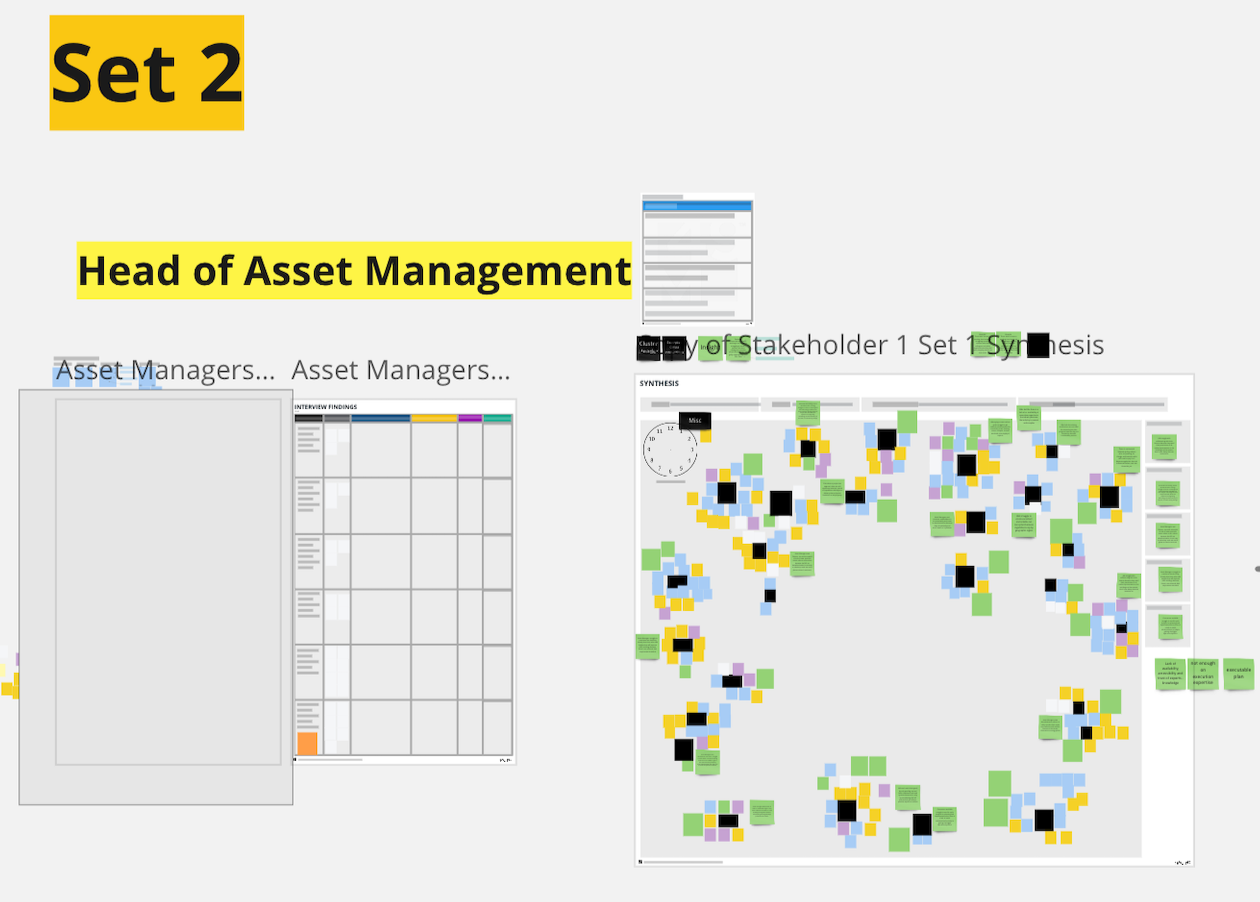
Four rounds of interviews were conducted with Asset Managers, 6 participants per round, with the screener updated between rounds to sharpen the focus.
Asset Managers were actively trying to understand new legislation and figure out how to decarbonise their portfolios by 2030, but were time-deprived and under pressure from investors not to lose money. Many had hired consultants for individual assets but hadn't yet built a clear portfolio-wide strategy.
Through synthesis with the wider team, three distinct segments emerged across the US, Nordics, and Europe. Those starting out had little urgency and were largely ignoring the problem — predominantly in the US, making them a lower priority. Research focus shifted toward the Nordics and Europe, where those on the path and those leading felt the most acute pain. Those on the path had hired consultants but hadn't started implementing changes. Those leading had hired consultants and were already making changes to assets.
Pain Prioritisation
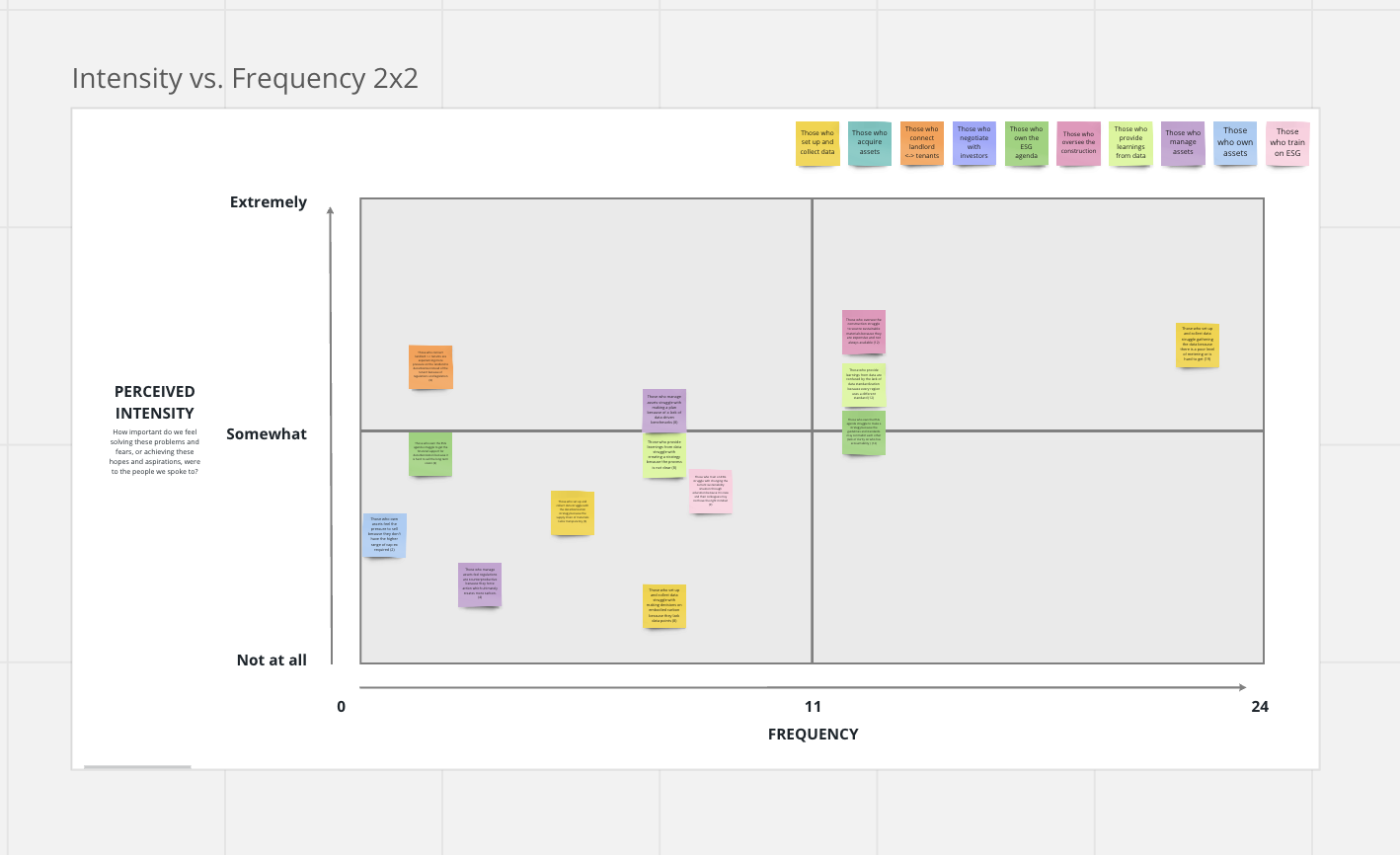
As the number of challenges grew, it became clear we needed a way to identify which had the most commercial opportunity. Mid-project, we agreed a severity scoring approach would work — asking participants to rate each pain from 1 to 10 based on impact. This sat alongside an intensity versus frequency matrix and a separate assessment of which problems would still be relevant in five years and which would likely be solved by government legislation. Together these tools helped separate the problems worth building on from the noise.
I also facilitated a Five Whys workshop to push beyond surface-level challenges and identify root causes. ROI emerged consistently as the most frequent, most intense, and most enduring pain.
Ideation Workshop
The top challenges identified through research were taken into an ideation session with the client team. Together we generated a wide range of potential solutions, drawing on research insights alongside the client team's sector knowledge, before dot voting to identify the strongest candidates to take forward to concept testing.
Concept/Storyboard Testing
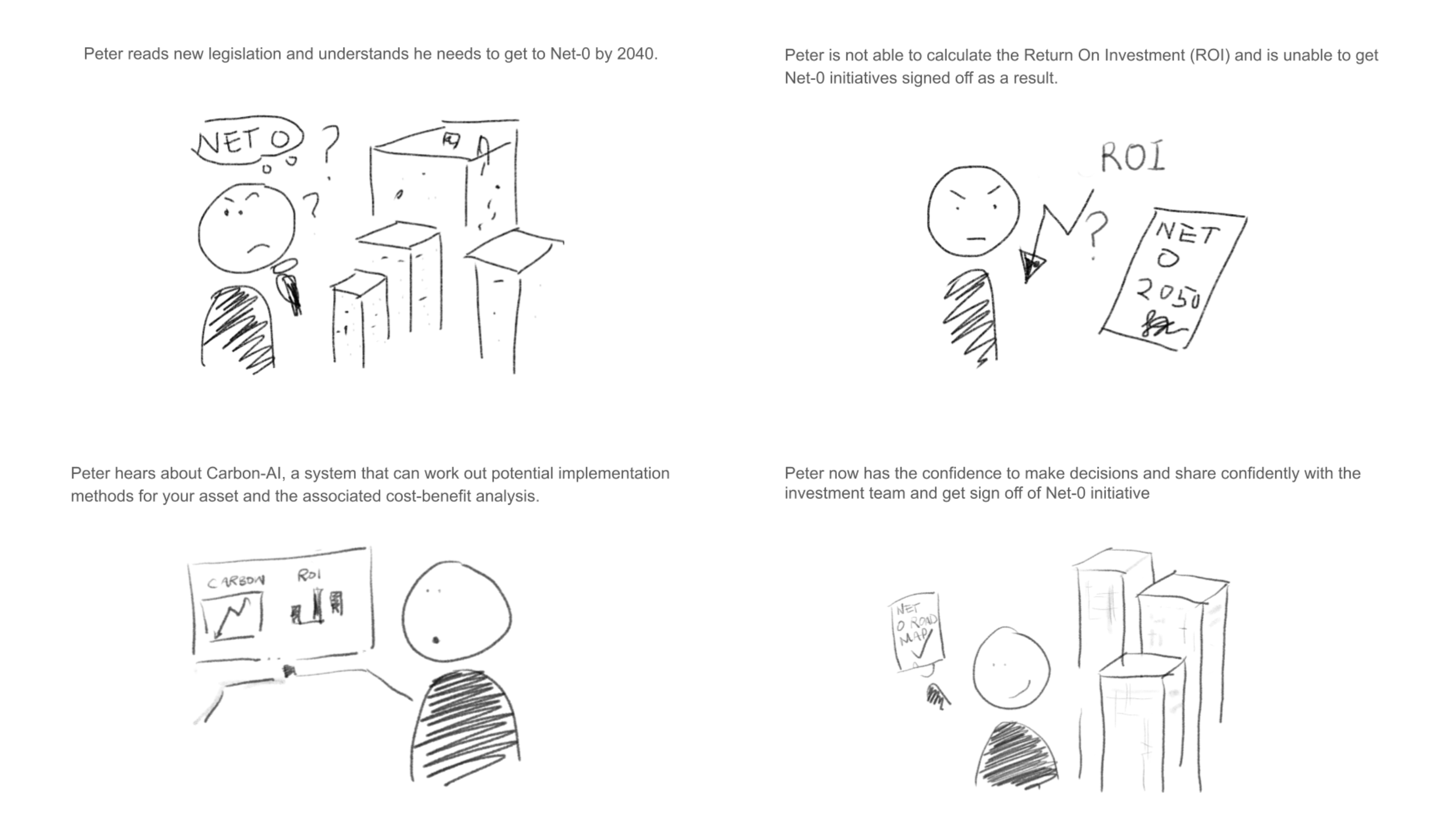
Five storyboards were developed to sense-check pain points through triangulation and test whether proposed solutions effectively addressed them. Each storyboard followed a four-part structure: the first slide set the scene and established context, the second surfaced the pain, the third introduced the solution, and the fourth tied it together.
Participants were shown each slide in sequence and asked to comment naturally as they went, capturing an unfiltered reaction to both the pain and the solution. At the end, participants rated the pain and an NPS score was recorded to give a directional signal of desirability alongside the qualitative response — helping prioritise which concepts were worth taking forward.
Six participants were tested per storyboard, with the strongest features brought together to define the MVP. Storyboards were intentionally low fidelity, this helped get honest answers as this indicated that not much time and investment had gone into the solution. Having a high fidelity solution can deter participants from giving honest feedback.
04 — FINDINGS
One pattern emerged consistently across every interview: Asset Managers knew they needed to act, but had neither the data nor the tools to justify doing so. Without a clear financial case, decarbonisation stayed on the to-do list.
Understanding new legislation was complex and calculating carbon output was not straightforward. This was a consistent blocker across participants at every stage of the maturity spectrum.
Legislation was difficult to interpret
Financial pressure from investors made it difficult for Asset Managers to act early. Without a clear ROI case they could not justify the capital expenditure required — and without that, sign-off was nearly impossible.
Decarbonisation offered little to no immediate ROI
Reports took months to arrive, ran to hundreds of pages, and were written in technical language few had time to work through. When Asset Managers finally had them, the financial metrics needed to prioritise next steps were nowhere to be found.
Consultant reports were overwhelming and under-useful
Portfolio-level strategy was missing
Asset Managers needed to understand how to decarbonise multiple buildings at once. Working building by building added cost, complexity, and time nobody had.
In a nascent field, reliable vendors with reviews and track records were difficult to find. This surfaced consistently as a gap — and one the product could potentially fill.
Trusted vendor guidance was lacking
06 - Validation & Testing
With the core pain points established, three value propositions were taken into prototype testing. To get natural, unbiased reactions, new participants were recruited each round — ensuring responses weren't shaped by exposure to earlier iterations.
Testing began with landing pages, each framed as a separate business with a single value proposition. Presenting them this way encouraged open, unfiltered feedback on the concept itself rather than the execution. Those reactions informed what detail was needed as prototypes progressed into more detailed low-fidelity screens.
Across four rounds of 6 participants over Zoom, sessions ran for one hour and were intentionally open-ended. Participants were guided through features and encouraged to surface new needs rather than simply validate existing assumptions. Several participants asked when the product would launch — an unprompted signal of potential desirability. Not every concept made it through. Features that didn't resonate were dropped, keeping the product focused on what participants actually needed for an MVP.
06 — outcome
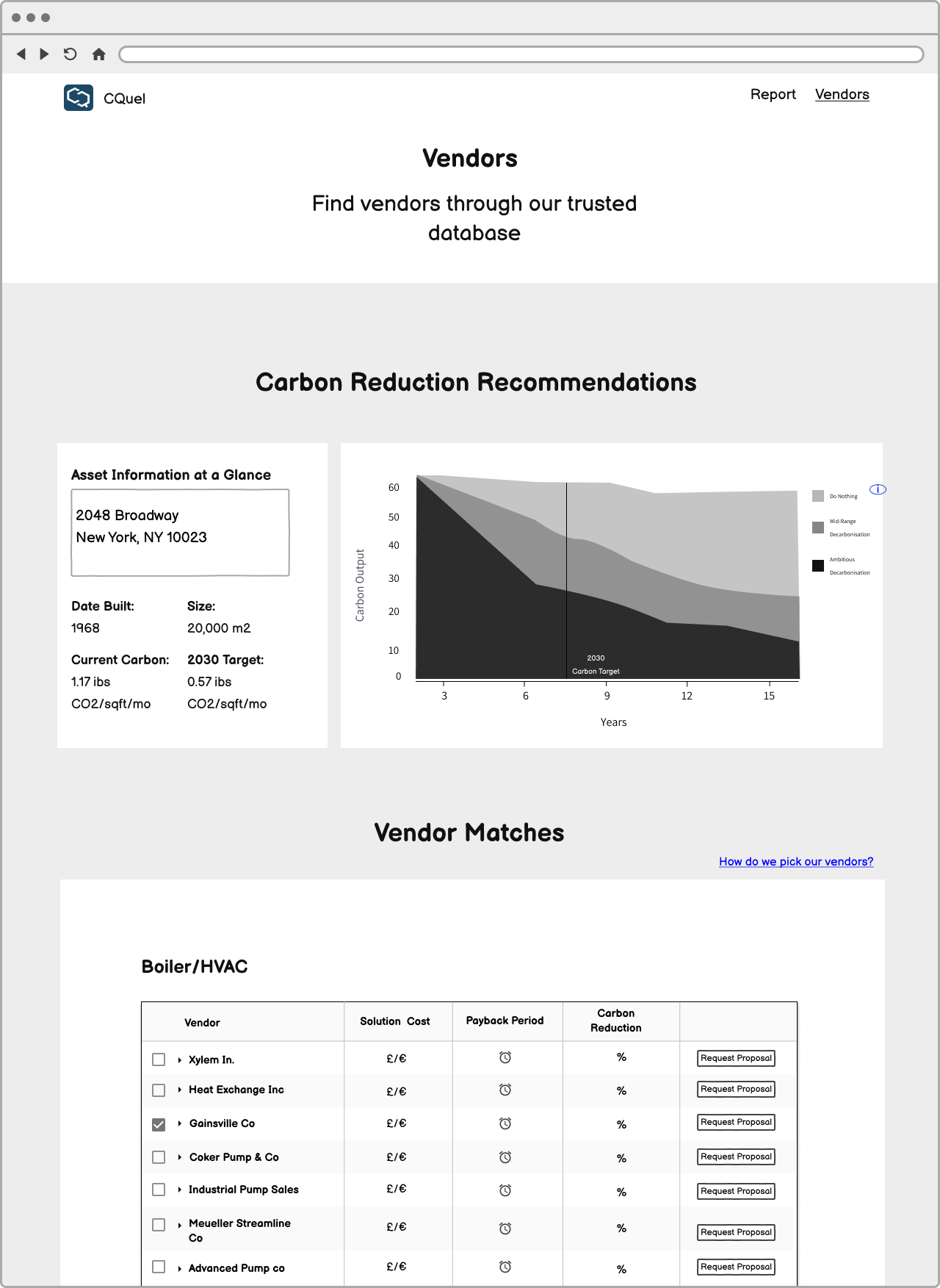
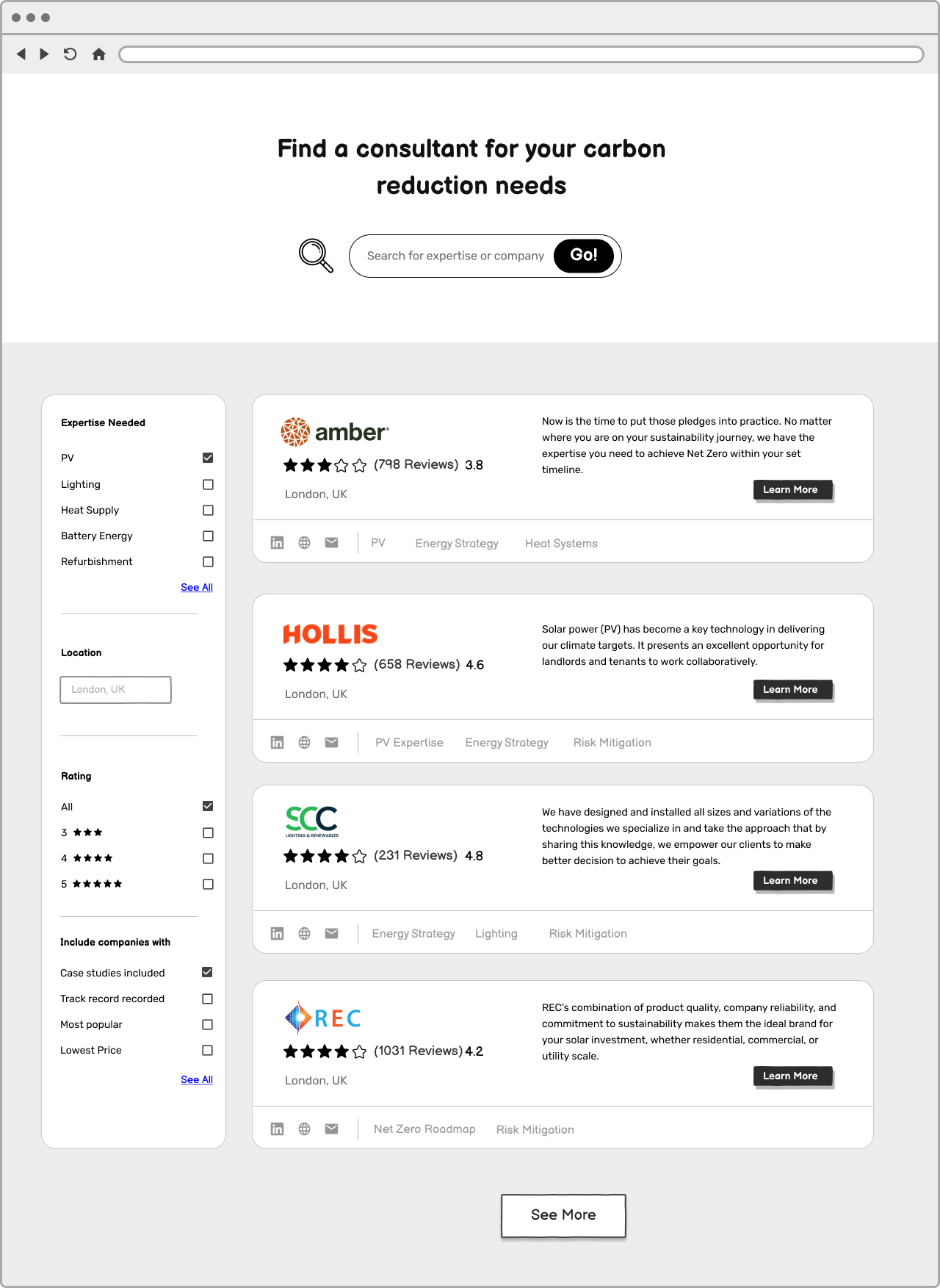
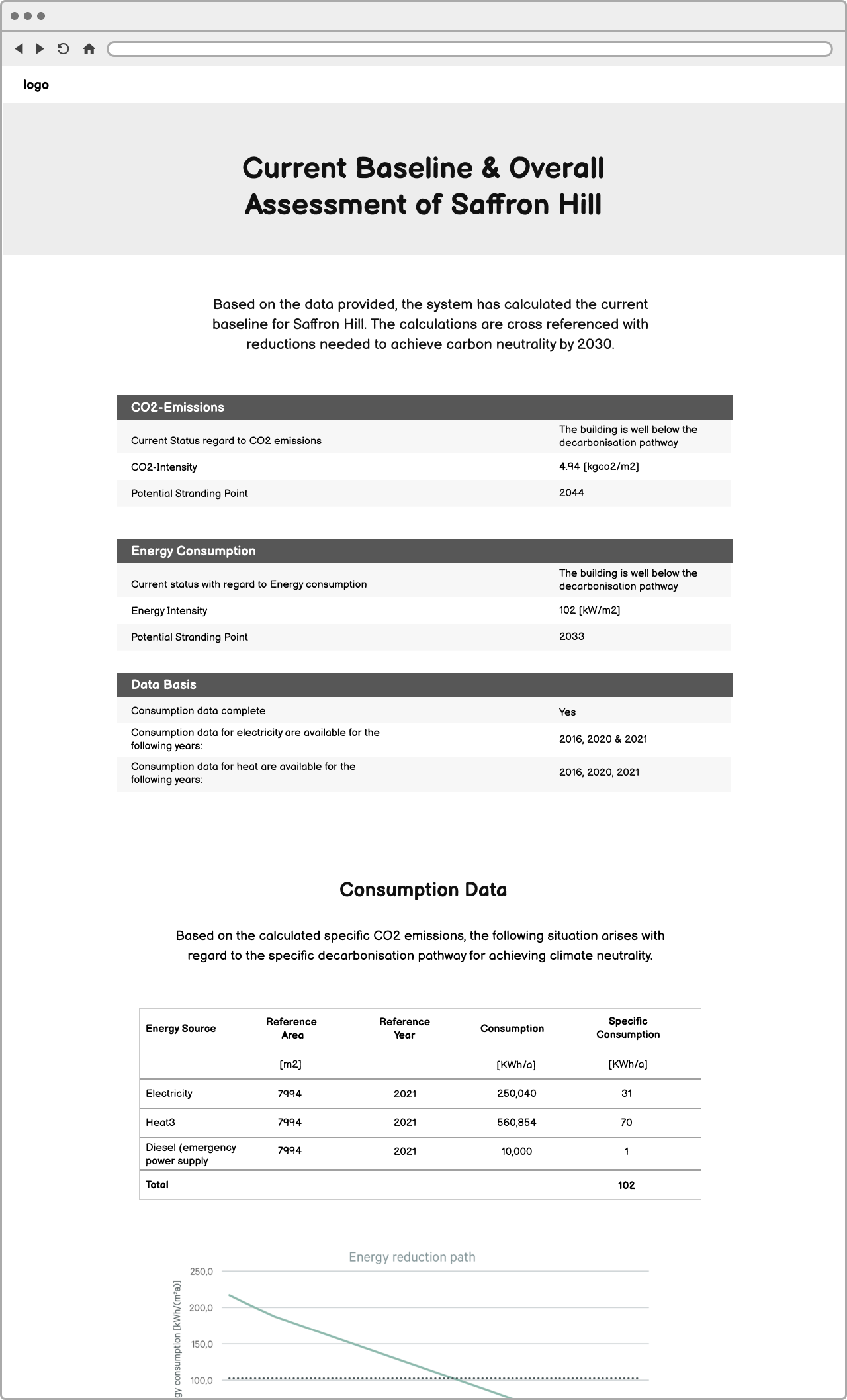
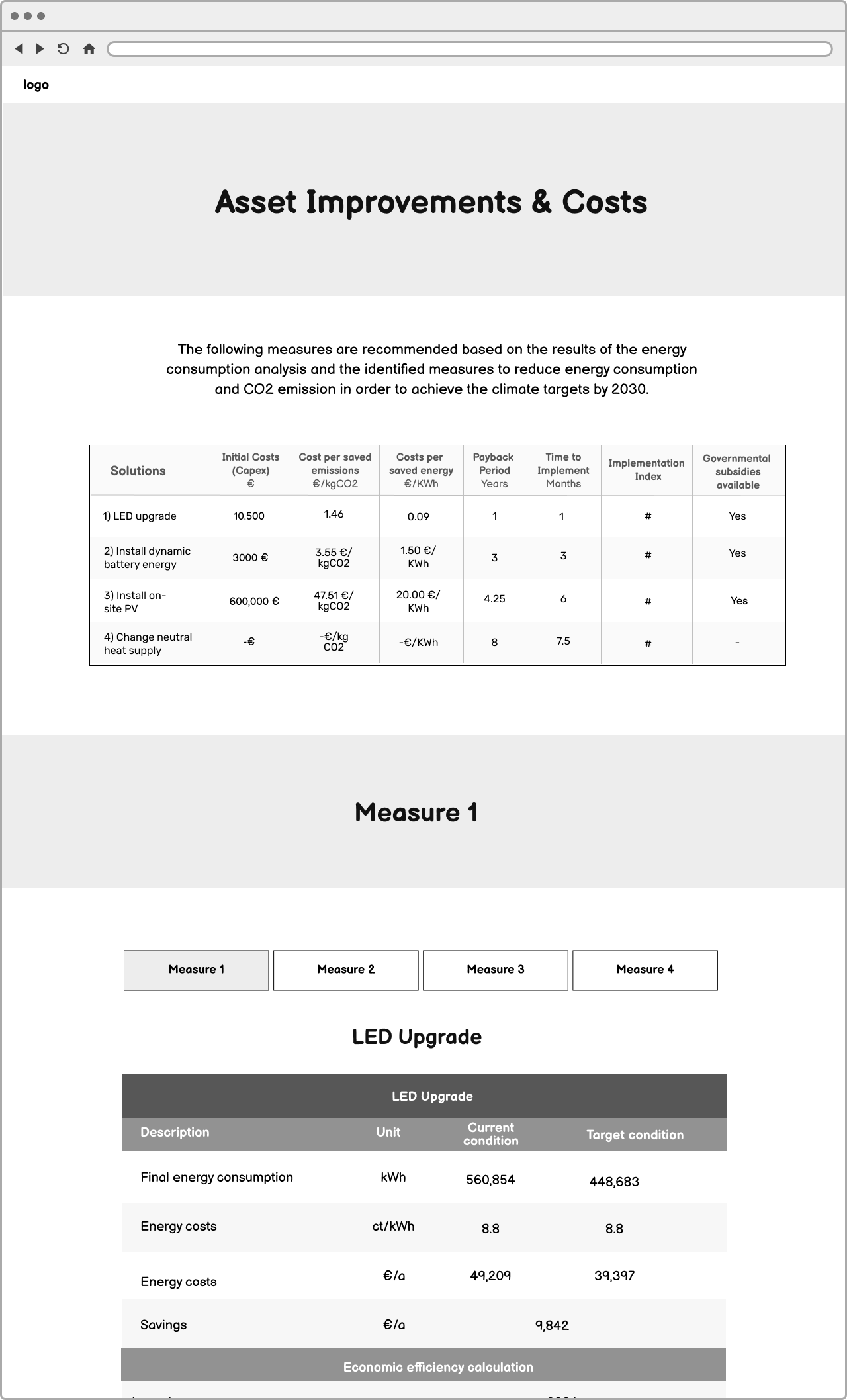
The research informed a pitch to the board outlining three recommended features: a portfolio-level carbon overview identifying high-level changes across multiple buildings simultaneously, a carbon baseline tool giving Asset Managers a clear picture of their current output, and a vendor marketplace to help find reputable suppliers in an early and unregulated industry.
The pitch was approved and the venture secured €600,000 in the first quarter for additional testing and marketing.
Alongside the research, a core part of the engagement was building the client team's capability to carry the venture forward independently. This meant training them in open-ended interviewing techniques, how to check for bias when probing, and agile ways of working — embedding a customer-centric approach into how the team operated rather than simply handing over a report. By the time the project concluded, the team had the skills and confidence to continue the research and development process without Mach49's support.
The platform has since secured further funding and now operates as a scale-up within the UK.
07 — reflection
Starting from such a broad brief with no prior sector knowledge was a significant challenge. In early interviews, unfamiliar terminology meant noting things down to research later rather than probing in the moment. By round three everything had clicked, but more time to get up to speed before fieldwork began would have made the earlier rounds sharper. On future projects of this kind, I'd build in a more structured immersion phase before the first interview.
A survey would have added real value — giving a broader sense of market adoption and helping quantify the pain points we were hearing qualitatively. It wasn't financially viable on this project, but it's something I'd push for on similar briefs where the market is large and largely unmapped.
The client training was a strong foundation, but it doesn't replace a dedicated researcher. We were clear about that — and part of the handover recommendation was encouraging the client to recruit someone to oversee the research as the venture scaled. Embedding capability is valuable, but knowing its limits is just as important.